Choosing the best place to live in New Zealand is really about choosing your trade-offs. Auckland gives you the broadest job market and the biggest city buzz. Wellington wins people over with culture, walkability and a strong sense of identity. Christchurch stands out for affordability and growth. Nelson is often the ideal place to live if sunshine, access to nature and a slower pace matter more than scale.
So the best place to live in NZ is not one place for everyone. It depends on whether you are moving for work, family life, study, retirement, outdoor access or simply a calmer day-to-day rhythm.
This guide compares the places that come up again and again for good reason, then helps you match each one to the kind of life you actually want.
At a glance: where to live in New Zealand based on your priorities
- Best for career opportunities: Auckland
- Best for culture and creative life: Wellington
- Best for affordability and long-term value: Christchurch
- Best for families: Hamilton or Christchurch
- Best for retirees: Nelson, Napier or Tauranga
- Best for students and academics: Dunedin
- Best for outdoor adventure: Queenstown
- Best coastal lifestyle with city convenience: Tauranga
- Best smaller-city lifestyle: Nelson
- Best warm-climate regional living: Whangārei and the Far North
What actually matters when choosing where to live in New Zealand
Before looking at the list, it helps to be honest about what will shape your daily life.
Housing and cost of living
This is usually the deciding factor. Auckland and Queenstown can be hard to justify unless your income is strong or your lifestyle priorities are very specific. Christchurch, Hamilton and Dunedin tend to feel more manageable.
Work opportunities
Auckland is still the biggest employment hub. Wellington is especially strong for government, policy, tech and creative work, with current public service roles in Wellington giving a useful sense of that concentration. Christchurch has grown into a serious option for engineering, construction, healthcare and professional services.
Lifestyle and pace
Some places feel unmistakably urban. Others feel like permanent weekend towns. Neither is automatically better. A lot of disappointment comes from choosing a city for its scenery and then realising the day-to-day routine does not suit you.
Transport and convenience
If you want a life that is at least partly walkable, Auckland is patchy, Wellington is better in the right areas, and most smaller centres are much easier if you drive.
Family fit
Schools, parks, commute times, childcare access and whether you can actually afford enough space matter more than postcard views.

The best places to live in New Zealand
1. Auckland - best for career opportunities
Auckland is the largest city in New Zealand, and for many people that alone makes it the frontrunner. It has the broadest job market, the largest migrant communities, the best international connections and the most obvious “start here” energy if you are moving from overseas.
What makes Auckland compelling is not just scale. It is variety. You can live close to the CBD and lean into city life, head west for a more laid-back feel, or choose suburbs near the North Shore or eastern bays for a different balance altogether. Few places in New Zealand offer so many versions of urban living.
Auckland is best for:
People who want the deepest pool of jobs, ambitious young professionals, expats, and anyone who values diversity, restaurants, events and big-city convenience.
What to watch:
Housing costs are high, traffic is a real quality-of-life issue, and not every neighbourhood gives you the polished lifestyle people imagine from the outside. Auckland rewards careful suburb choice more than almost anywhere else in the country.
2. Wellington - best for culture, creativity and compact city living
Wellington has a loyal following for a reason. It feels more intimate than Auckland, more civic, more bookish, and in many pockets more walkable. If Auckland sprawls, Wellington gathers itself more tightly around the harbour and hills.
For many movers, Wellington is the city they choose when they want culture without losing professional opportunity. It tends to suit people who care about cafés, galleries, independent shops, public institutions and a city with a clear personality. It also works well for those who prefer a capital-city atmosphere without the size of a true metropolis.
Wellington is best for:
Public-sector professionals, creatives, people who value culture, couples without huge space needs, and anyone who wants city life that still feels recognisably human in scale.
What to watch:
It can be expensive, weather is not a trivial issue, and the housing stock varies wildly in quality. Wellington charm is real, but it does ask for tolerance: wind, hills and older homes are part of the package.
3. Christchurch - best for affordability and growth
If one place consistently looks like the balanced answer, it is Christchurch. It combines more affordable housing than Auckland and Wellington with enough infrastructure, jobs and space to feel practical rather than merely picturesque, and its official housing growth plans reinforce that sense of long-term capacity.
Christchurch often appeals to families and professionals who want room to breathe without giving up city-level amenities. The rebuild after the earthquakes changed the city’s identity. It now feels more modern in parts, more deliberate in layout, and still greener and calmer than most cities of similar size.
Christchurch is best for:
Families, first-home buyers, professionals priced out of Auckland, and anyone who wants the South Island lifestyle without retreating into a very small town.
What to watch:
It can feel quieter and more spread out than Auckland or Wellington, which some people love and others experience as a lack of energy. If nightlife or dense urban life is a priority, Christchurch may feel restrained.
4. Hamilton - best for families and overall value
Hamilton does not always get the glamour treatment, but that may be exactly why it deserves attention. It is one of the strongest practical choices in the country. Housing is usually more affordable than in Auckland, the city has major education and healthcare institutions, and it is well placed if you want access to the rest of the North Island.
This is often the best city in New Zealand for people who care less about image and more about liveability. Commutes are generally easier, family life can be more manageable, and you still have access to a proper city rather than a regional outpost.
Hamilton is best for:
Families, professionals wanting better value, university staff and students, and people who like the idea of being within reach of Auckland without paying Auckland prices.
What to watch:
It is not the most dramatic or romantic place on the list. If your idea of New Zealand living is built around coastline, mountains or a highly distinctive city identity, Hamilton may feel functional rather than aspirational.
5. Tauranga - best for coastal living with mainstream comfort
Tauranga has become one of the most desirable places to live in New Zealand for people who want a beach lifestyle without giving up city essentials. Mount Maunganui, in particular, carries enormous appeal: surf, walks, sunshine and a day-to-day atmosphere that feels lighter than many inland centres.
It tends to attract families, professionals with some flexibility, and retirees who want warmth and convenience rather than isolation. There is a polished, easy-living quality to Tauranga that many people find hard to resist.
Tauranga is best for:
Beach lovers, retirees, families wanting a warmer coastal setting, and professionals who can work remotely or in regional business roles.
What to watch:
The secret is out. Housing is not cheap, and popularity has brought pressure on roads and services. Tauranga can look relaxed, but affordability is no longer its selling point.
6. Nelson - best for sunshine, pace and a smaller-city lifestyle
Nelson is the place many people picture when they say they want a gentler life in New Zealand. It is smaller, sunnier and more lifestyle-led than the main centres, with easy access to beaches, nearby national parks and the kinds of weekend activities that make daily life feel less transactional.
If Auckland is about opportunity and Wellington about energy, Nelson is about ease. That sounds vague until you have lived somewhere that lacks it. For the right person, this matters more than scale or prestige.
Nelson is best for:
Retirees, remote workers, creatives, outdoorsy households, and anyone who wants a smaller centre that still has enough infrastructure to be comfortable.
What to watch:
Job options are narrower. If your career depends on a deep local market, Nelson can feel limiting. It suits people whose work is portable or whose priorities have shifted away from constant career acceleration.
7. Dunedin - best for students, academics and character
Dunedin has one of the clearest identities of any city in the country. It is shaped by the university, by heritage architecture, by the coast, and by a slightly eccentric seriousness that people either find endearing or not for them at all.
It is often underrated because it sits outside the usual Auckland–Wellington–Christchurch conversation. Yet for students, academics, healthcare workers and people who like a city with genuine character, it can be an excellent fit. It is also one of the more affordable urban options in New Zealand.
Dunedin is best for:
Students, academics, healthcare professionals, first-home buyers and people who prefer history and personality over polish.
What to watch:
The climate is cooler, and the city’s rhythm may feel too quiet for those who want fast growth or a more cosmopolitan scene. Dunedin is not trying to be Auckland. That is part of its strength.
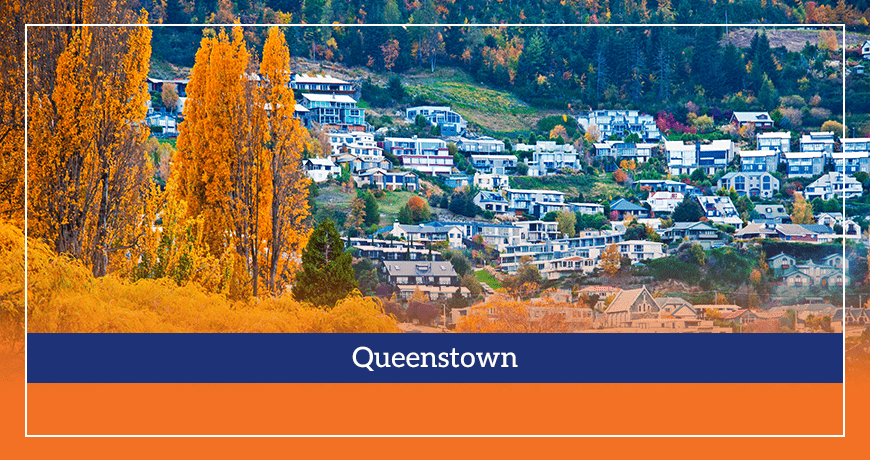
8. Queenstown - best for adventure and a high-energy lifestyle
Queenstown is probably the easiest place on this list to romanticise. The landscape is extraordinary, the outdoor access is world-class, and the social atmosphere can feel electric if you like movement, tourism and a certain kind of high-performance leisure culture.
For some people, that is the dream. For others, it is brilliant for a year and exhausting for a decade. That trade-off matters even more if you are planning around post-study work visa changes. Queenstown is one of those places where lifestyle fit matters more than almost anywhere else.
Queenstown is best for:
Outdoor enthusiasts, hospitality and tourism workers, remote earners with strong budgets, and people who genuinely want an adventure-centred life.
What to watch:
It is expensive. Very expensive. Housing pressure can be intense, and the local economy is heavily shaped by tourism. If you need affordability, stability and space, Christchurch or Dunedin may be wiser South Island choices.
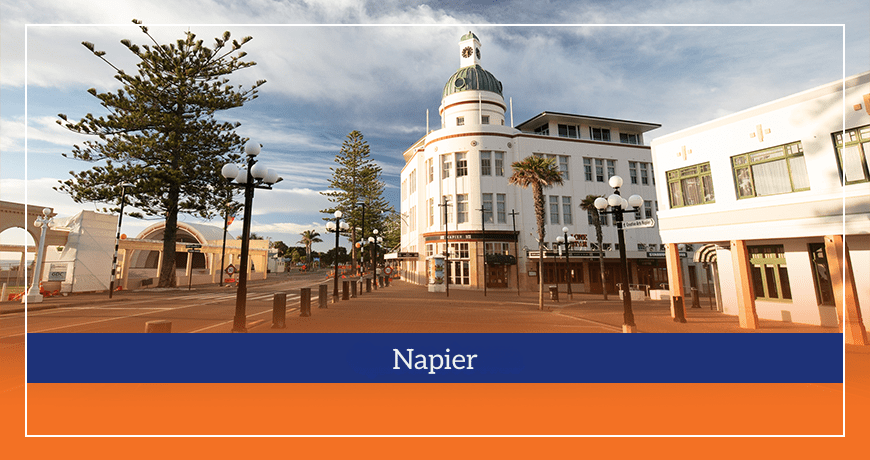
9. Napier - best for sunshine, charm and a slower pace
Napier offers a style of living that feels attractive without trying too hard. Art Deco architecture gives the city a distinct look, Hawke’s Bay brings wine country and food culture into the picture, and the climate appeals to people who want more sun and less bustle.
It often works well for retirees and mid-life movers who want quality of life rather than constant upward motion. There is enough going on, but not so much that daily life feels overstretched.
Napier is best for:
Retirees, couples, people working in wine, food, healthcare or regional business, and anyone who likes a sunnier, slower city with personality.
What to watch:
The job market is smaller than in the biggest centres. If career progression is the top priority, Napier may feel limiting unless your sector is already well represented there.
10. Whangārei and the Far North - best for warmth and regional living
If your version of the best place to live in New Zealand involves subtropical weather, easier access to beaches and a less frantic pace, Whangārei and the wider Far North deserve a look. This part of the country has a different feel from the main southern centres: greener, warmer, more regional, and in some areas more self-directed.
For people wanting to step away from large-city pressure, that can be a huge advantage. It is also one of the few parts of the country where “lifestyle” still means something broader than a marketing phrase.
Whangārei and the Far North are best for:
Remote workers, retirees, tradespeople, people prioritising climate, and anyone drawn to coastal living with more breathing room.
What to watch:
Regional living can mean fewer specialist jobs, longer drives and less access to big-city services. This is a move that works best when you actively want that trade-off, not when you merely hope it will not matter.
Best places to live in New Zealand for specific types of movers
Best places to live in New Zealand for families
If you are moving with children, Christchurch and Hamilton usually make the strongest all-round cases. Both offer better space-for-money than Auckland, practical day-to-day living and enough schools, parks and services to feel stable. Tauranga also appeals to families, especially if coastal living is a priority, though the cost advantage is not what it once was.
Best place to live in New Zealand for young adults
For young adults, it depends on what “best” means. Auckland is strongest for career-building and social variety. Wellington often suits those who want culture, political or creative work and a more compact city feel. Queenstown is the high-energy option if you are prioritising lifestyle and adventure over long-term affordability.
Best place to live in New Zealand for retirees
Nelson, Napier and Tauranga are the standouts. They combine climate, pace, services and an easier everyday feel than the biggest cities. The right choice comes down to whether you want artsy and outdoorsy, wine-country charm, or a more polished coastal city.
Best place to live in New Zealand for expats
Most expats still find Auckland the easiest landing point because of its scale, diversity and job market, especially for students already focused on studying in New Zealand. Wellington is a strong second choice if your work fits its economy. For expats who already have remote income or secure employment, Christchurch becomes especially attractive because the quality-of-life maths is often better.
Best places to live in New Zealand in the South Island
If your heart is set on the South Island, start with Christchurch, Nelson, Dunedin and Queenstown. Christchurch is the most balanced. Nelson is the lifestyle favourite. Dunedin offers character and value. Queenstown is stunning, but financially harder to justify.
How to choose the right place for you
A useful rule is this: do not choose a city based on your ideal Saturday if your Monday-to-Friday life will not work there.
Ask yourself:
- Where is my income most realistic?
- What kind of home can I actually afford?
- Do I want stimulation or calm?
- How much driving am I willing to do?
- Am I moving for the next two years or the next fifteen?
That last question matters. Auckland may be the best place to begin, while Nelson or Napier may be better once work is stable and your priorities shift. This is especially true if you are weighing long-term settlement options after graduation. The “best” place can change with life stage.

Frequently Asked Questions
What is the best city to live in New Zealand overall?
For most people, Christchurch is the strongest all-round option because it balances affordability, amenities, space and opportunity better than many rivals. But Auckland is still the best choice if career opportunities come first.
Which city is the cheapest to live in New Zealand?
Among the better-known cities in this guide, Dunedin, Hamilton and Christchurch are often more affordable than Auckland, Tauranga or Queenstown. The cheapest options overall are usually smaller regional centres, though they often come with fewer jobs.
Is Auckland or Wellington better to live in?
Choose Auckland for job breadth, diversity and big-city convenience. Choose Wellington for culture, compact living and a more distinct urban personality.
Is New Zealand a good place to live for expats?
In many cases, yes. New Zealand appeals to expats because of its outdoor lifestyle, relative ease of access to nature, and generally relaxed social atmosphere. The harder part is usually housing cost, not whether the country is attractive to live in.
What is the downside of living in New Zealand?
The main downsides are usually housing costs, distance from other countries, smaller job markets outside the biggest centres, and in some places weaker public transport than newcomers expect.
Final thoughts
The best places to live in New Zealand are not all trying to offer the same thing, and that is exactly why the choice matters. Auckland is still the obvious answer for career opportunities. Wellington remains the pick for culture and a more compact city life. Christchurch makes the strongest case for affordability and growth. Nelson, Napier and Tauranga appeal when quality of life starts to mean sunshine, pace and day-to-day ease.
If you are still unsure where to live in New Zealand, start by narrowing the decision to one non-negotiable: work, budget, family fit, lifestyle or climate. Once that is clear, the shortlist tends to reveal itself very quickly.