The best universities for PhD in Data Science in USA for Fall 2027 include New York University, UC San Diego, the University of Virginia, Carnegie Mellon University, Stanford University and Boston University.
But there is an important distinction.
Some universities offer a direct PhD in Data Science. Others provide equally strong doctoral research through Statistics, Machine Learning, Biomedical Data Science, Computing or a formal Data Science specialisation. For a PhD applicant, the programme title matters less than the quality of the research fit, supervision and funding.
This 2027 ranking therefore compares faculty and research strength, doctoral structure, Data Science relevance, funding and current admissions information. It is designed for applicants who want to identify the strongest research route, not simply the biggest university name.
Best Data Science PhD Programmes in USA: 2027 Ranking
|
Rank
|
University
|
Doctoral Route
|
Fall 2027 Deadline
|
Funding Snapshot
|
Best For
|
|
1
|
New York University
|
Direct PhD in Data Science
|
Details pending
|
Tuition + competitive stipend for up to 5 years
|
ML, responsible AI, mathematical Data Science
|
|
2
|
UC San Diego
|
Direct PhD in Data Science
|
2 Dec 2026, tentative
|
Funding varies by appointment/package
|
ML, statistics, responsible ML, data systems
|
|
3
|
University of Virginia
|
Direct PhD in Data Science
|
8 Jan 2027
|
Tuition, fees, insurance + about $41,400/year
|
Funded interdisciplinary Data Science
|
|
4
|
Carnegie Mellon University
|
Statistics PhD with Data Science and ML pathways
|
1 Dec 2026
|
Full tuition + about $3,100/month for 9 months
|
Statistical ML, causal inference
|
|
5
|
Stanford University
|
Statistics / Biomedical Data Science pathways
|
Statistics: 2 Dec 2026
|
Five-year support for Statistics PhD
|
Statistical learning, AI, biomedical data
|
|
6
|
Boston University
|
PhD in Computing & Data Sciences
|
15 Dec
|
Five years of support
|
Interdisciplinary computing and Data Science
|
|
7
|
UC Berkeley
|
Statistics PhD with major Data Science depth
|
1 Dec 2026
|
Up to five years of support
|
Probability, statistics, ML
|
|
8
|
University of Michigan
|
PhD in Survey and Data Science
|
8 Jan
|
Four-year funding package
|
Survey methods, social data, statistics
|
|
9
|
University of Washington
|
Advanced Data Science option within a PhD
|
Home-department deadline
|
Department-specific
|
Data Science inside another discipline
|
|
10
|
Columbia University
|
Data Science specialisation within eligible PhDs
|
Home-department deadline
|
Home-department funding
|
Computation, optimisation, statistics
|
This is a Data Science PhD ranking, not a general university league table.
That produces a slightly counterintuitive result. A globally famous university can be a weaker choice for one applicant than a less famous institution with the right supervisor, secure funding and a doctoral structure that matches the proposed research.
For a PhD, research fit often beats brand recognition.
How We Ranked the Best Data Science PhD Programmes
|
Ranking Factor
|
Weight
|
|
Research strength and faculty fit
|
30%
|
|
Funding security
|
20%
|
|
Relevance of the doctoral route to Data Science
|
20%
|
|
Admissions and deadline transparency
|
15%
|
|
Interdisciplinary opportunities
|
10%
|
|
Clarity for international applicants
|
5%
|
Research and faculty fit receive the greatest weight because doctoral study eventually becomes highly specialised.
Think about two applicants interested in machine learning. One wants to study causal inference in healthcare, while the other wants to build scalable learning systems. Both may search for a PhD in Data Science in USA, but they should not necessarily apply to the same departments.
Start with the research question. Then inspect faculty publications, laboratories and funding.
Applicants who are still working through the wider admissions process may find it useful to understand how international students typically approach study in the USA before narrowing the list to doctoral programmes.
1. New York University
Best for: Machine learning, mathematical Data Science, responsible AI and interdisciplinary research.
New York University ranks first because its Center for Data Science offers a direct doctorate centred on the discipline itself.
NYU's PhD in Data Science develops methodological research while connecting Data Science with science, medicine, industry and government. The programme also includes an interdisciplinary curriculum, attention to the ethical implications of data-driven research, tuition support and a competitive stipend for successful candidates for up to five years during the fall and spring semesters.
For Fall 2027, the full application timetable is not yet available. NYU's current doctoral admissions requirements state that Fall 2027 details are coming soon and identify calculus, probability, statistics and programming as expected preparation.
For applicants who want both the degree title and research environment to sit squarely inside Data Science, NYU is difficult to overlook.
2. University of California, San Diego
Best for: Machine learning, statistical modelling, responsible ML and data systems.
UC San Diego offers a direct PhD in Data Science through the Halıcıoğlu Data Science Institute.
Its research-oriented structure combines mathematical, statistical and computational methods with doctoral research. Students also use research rotations to explore potential faculty matches before moving deeper into dissertation work.
UCSD's Fall 2027 Data Science admissions schedule currently lists a tentative opening date of 14 October 2026, a tentative deadline of 2 December 2026 and a Fall quarter start date of 20 September 2027. The application fee is $135 for US applicants and $155 for international applicants.
That level of cycle-specific transparency gives UCSD an advantage for applicants planning now rather than relying on last year's dates.
3. University of Virginia
Best for: A direct Data Science PhD with transparent funding and interdisciplinary research.
The University of Virginia combines a standalone Data Science doctorate with one of the clearest funding arrangements in this ranking.
Its doctoral funding package includes full remission of tuition and fees, single-person student health insurance and approximately $41,400 per year in living support, normally distributed over 12 months through a fellowship, research assistantship or teaching assistantship.
For Fall 2027, UVA's published PhD admissions calendar shows that applications opened on 15 August 2026 and close on 8 January 2027 at 11:59 pm ET. Selected applicants may be invited to virtual interviews during the week of 8 February 2027.
Here's the thing: for a funded research doctorate, headline tuition is often less useful than the financial package the student actually receives. UVA makes that package unusually easy to evaluate.
4. Carnegie Mellon University
Best for: Statistical machine learning, causal inference, computational statistics and advanced methodology.
Carnegie Mellon needs careful classification because its strongest route is not simply a doctorate labelled Data Science.
The Department of Statistics & Data Science offers a Statistics PhD and related pathways connecting Statistics with Machine Learning, Public Policy, Neural Computation and other quantitative areas. These routes place students directly inside many of the methods that underpin modern Data Science.
CMU's Statistics and Data Science PhD admissions and funding information confirms that Fall 2027 applications open on 1 October 2026 and close on 1 December. The GRE is optional for the Statistics PhD, while joint programmes have different requirements. The standard Statistics application fee is $90, and PhD students receive full tuition scholarships and an approximate $3,100 monthly stipend during the nine-month academic year through teaching or research assistantships.
For statistical learning, causal methodology or computational statistics, CMU can be a stronger research match than some direct Data Science doctorates.
5. Stanford University
Best for: Statistical learning, machine learning, biomedical data and quantitative research.
Stanford offers several ways into advanced Data Science research rather than one universal standalone doctorate.
Students focused on statistical methodology and machine learning can pursue Statistics, while those interested in medicine, biology and health data can investigate Biomedical Data Science.
Stanford's Statistics PhD admissions cycle for Autumn 2027 has a deadline of 2 December 2026 at 11:59 pm PST.
Students admitted to the Statistics doctorate also receive five years of 12-month financial support, including tuition, Cardinal Care health insurance and salary or stipend support.
This is exactly why applicants should not search only for degrees carrying the words “Data Science”. A related doctorate with exceptional faculty alignment can be the more powerful research route.
6. Boston University
Best for: Interdisciplinary computing, machine learning and research crossing traditional departments.
Boston University's doctorate combines foundational computing, applied Data Science and research across subject areas.
Its PhD in Computing & Data Sciences includes broad and specialised coursework, research rotations, responsible research training and an original dissertation. Students do not need to identify a thesis adviser before applying.
The current doctoral admissions requirements list a 15 December application deadline and make GRE or GMAT submission optional.
BU also follows a five-year funding model for PhD students in good standing, covering full tuition, mandatory fees, basic student health insurance and a stipend stated in the admission offer.
That flexibility makes BU particularly relevant to applicants whose work spans computing, Data Science and another application domain.
7. University of California, Berkeley
Best for: Probability, statistical theory, machine learning and foundational Data Science.
Berkeley's principal doctoral route here is Statistics rather than a standalone Data Science degree.
That does not make it peripheral to the field. Berkeley Statistics places doctoral training across statistics, probability and Data Science, with strong interdisciplinary connections across the university.
Its Fall 2027 Statistics PhD admissions information lists a deadline of 1 December 2026, and the General GRE is neither required nor accepted.
All admitted students receive up to five years of doctoral financial support through fellowships, teaching appointments and research appointments. The package includes tuition and fees, health insurance and a living stipend, subject to satisfactory progress.
If you also want to compare the wider institutional environment, this overview of leading US universities for international students can help put departmental fit into a broader context.
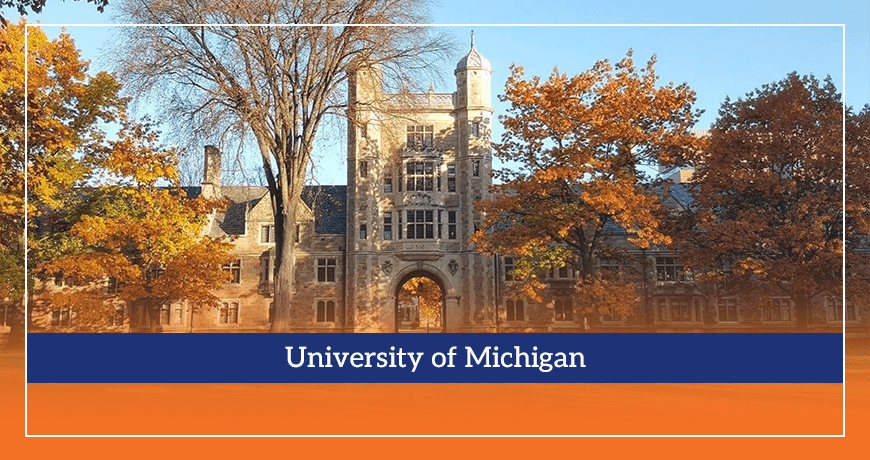
8. University of Michigan
Best for: Survey methodology, social data, statistics and quantitative research involving human populations.
Michigan offers a specialised PhD in Survey and Data Science through its Institute for Social Research.
The programme is particularly relevant to applicants interested in data quality, survey methods, social measurement and quantitative research rather than purely computational areas such as computer vision or systems.
Michigan's Survey and Data Science doctoral admissions process uses 8 January as the PhD application deadline.
Its funding proposition is clear too. All admitted PhD students receive a continuous four-year funding package that includes stipend and tuition plus health and dental insurance.
For the right research question, that specialisation is an advantage rather than a limitation.
9. University of Washington
Best for: Advanced Data Science research embedded inside another doctoral discipline.
The University of Washington takes a different approach.
Rather than offering one universal standalone Data Science PhD, its Allen School allows PhD students to pursue an official Advanced Data Science Option focused on developing or applying advanced Data Science methods. Coursework can include machine learning, data management, data visualisation and statistics, and the option appears on the student's transcript.
Related Advanced Data Science options also connect PhD students across several other UW disciplines.
There is therefore no single university-wide application deadline or funding package for the option. Those depend on the home PhD.
For applicants who want deep Data Science research without leaving their core discipline, that flexibility can be valuable.
10. Columbia University
Best for: Students entering an eligible Columbia doctorate who want formal interdisciplinary Data Science training.
Columbia is frequently misclassified in online university lists.
Its PhD Specialization in Data Science is not an independent doctorate. It is available to students already enrolled in eligible PhD programmes such as Applied Mathematics, Computer Science, Electrical Engineering, Industrial Engineering and Operations Research, and Statistics.
Students then add structured Data Science study to the requirements of their home doctorate.
Columbia can therefore provide an excellent research environment, but applicants should choose the underlying PhD first and treat the Data Science specialisation as an additional layer.
Fall 2027 Data Science PhD Application Deadlines
|
University
|
Current Status
|
|
Carnegie Mellon
|
1 Dec 2026
|
|
UC Berkeley
|
1 Dec 2026
|
|
Stanford Statistics
|
2 Dec 2026
|
|
UC San Diego
|
2 Dec 2026, tentative
|
|
Boston University
|
15 Dec
|
|
University of Virginia
|
8 Jan 2027
|
|
University of Michigan
|
8 Jan
|
|
NYU
|
Fall 2027 details pending
|
|
University of Washington
|
Depends on home department
|
|
Columbia
|
Depends on home department
|
Many of the strongest Data Science PhD programmes in the USA therefore converge around December.
The real preparation period comes earlier. Applicants should already be refining research interests, reading faculty papers and organising recommendation letters before the busiest deadline period begins.
A useful way to strengthen that part of the application is to understand what makes an academic recommendation letter genuinely persuasive rather than treating recommendations as a last-minute administrative step.
Direct Data Science PhD vs Statistics or Computer Science PhD
A direct Data Science doctorate is not automatically the best route.
|
Area
|
Data Science PhD
|
Statistics PhD
|
Computer Science PhD
|
|
Main emphasis
|
Interdisciplinary data research
|
Probability, inference and methodology
|
Algorithms, systems and computing
|
|
Machine learning
|
Usually strong
|
Often statistically focused
|
Often computationally focused
|
|
Statistical theory
|
Strong to moderate
|
Usually strongest
|
Varies
|
|
Data systems
|
Often included
|
Usually secondary
|
Often strong
|
|
Domain applications
|
Usually central
|
Common
|
Varies
|
|
Best fit
|
Cross-disciplinary data problems
|
Statistical methods and inference
|
AI, ML, algorithms and systems
|
Here's the thing: a student working on causal inference may prefer CMU or Berkeley Statistics to a direct Data Science doctorate. Someone studying biomedical prediction may favour Stanford. A systems researcher may fit better inside Computer Science.
The research question should decide the route.
If your main aim is an industry Data Science career rather than original research, comparing a master's route in the USA before committing four to six years to doctoral study can be sensible.
PhD in Data Science Admission Requirements
There is no national admissions formula, but competitive Data Science PhD programmes tend to look for the same core foundations.
Applicants commonly need experience in calculus, linear algebra, probability, statistics and programming. Machine learning, optimisation, algorithms, databases or scientific computing may become important depending on the proposed research.
Research experience carries different weight from coursework. A thesis, research assistantship, serious independent project or publication can show that an applicant understands how uncertain and iterative original research can be.
Recommendation letters should reinforce that evidence rather than simply repeat grades.
GRE policies now vary considerably. Berkeley does not accept the General GRE for its Fall 2027 Statistics PhD, CMU makes it optional for the Statistics doctorate, and Boston University treats GRE or GMAT submission as optional.
International students should also check English-language requirements at department level. University-wide acceptance does not always guarantee that every doctoral department follows the same test policy.
PhD in Data Science Cost and Funding
For a research PhD, advertised tuition can be misleading.
A more useful question is: what does the student actually pay after doctoral funding?
At UVA, doctoral funding includes tuition and fee remission, health insurance and approximately $41,400 in annual living support.
CMU Statistics & Data Science provides full tuition plus approximately $3,100 per month during the nine-month academic year.
Berkeley Statistics provides admitted students with up to five years of support covering tuition and fees, health insurance and a living stipend.
Michigan's Survey and Data Science doctorate guarantees four years of stipend, tuition, health and dental coverage.
Boston University guarantees five years of support for PhD students in good standing.
External funding can add another layer. The current NSF Graduate Research Fellowship provides $37,000 in annual stipend support plus a $16,000 cost-of-education allowance for each of three funded years within a five-year fellowship period.
Applicants should check eligibility carefully. Not every fellowship or scholarship is open to every international student.
Beyond university packages, you can also compare US scholarship and funding options. If your intended doctorate sits heavily inside artificial intelligence, reviewing funded PhD opportunities focused on AI research may reveal additional routes.
Never treat “fully funded” as enough information on its own. Compare tuition remission, stipend, summer support, insurance, mandatory fees and guaranteed duration separately.
Best Data Science PhD Programmes by Research Area
For machine learning and AI, NYU, UCSD, CMU, Stanford and Berkeley deserve close attention.
For statistical methodology, causal inference and probability, CMU, Berkeley, Stanford Statistics and UCSD are particularly strong.
For biomedical and healthcare data, Stanford offers a natural research environment, while NYU and UVA also support substantial cross-disciplinary work.
For survey, social and behavioural data, Michigan provides a distinctive specialist route.
For data systems and scalable computing, UCSD, Boston University and relevant University of Washington departments warrant investigation.
For responsible AI and data ethics, NYU, UVA, UCSD and Boston University offer promising intersections between technical and societal research.
Do not apply to every university in a strong category. Read recent faculty papers first. If you cannot identify two or three plausible supervisors whose current research connects naturally with your proposed work, the university probably should not be high on your shortlist.
Are Online Data Science PhD Programmes Available in the USA?
Yes, but dedicated online research doctorates in Data Science remain uncommon.
That is not accidental.
Doctoral research depends heavily on adviser interaction, seminars, research groups, computing infrastructure and long-term collaboration. Many of the strongest research-focused programmes therefore remain campus-based.
Online or hybrid doctorates in analytics, information systems and related disciplines may suit experienced professionals, but they should not automatically be treated as substitutes for a traditional research PhD.
For an academic or research-scientist career, supervision and research environment deserve more weight than delivery convenience.

Career Outlook After a PhD in Data Science
A Data Science PhD can lead to careers in academic research, AI, machine learning, quantitative research, statistical methodology and senior technical roles.
The broader US labour market is strong. The latest Bureau of Labor Statistics outlook for data scientists reports a median annual wage of $120,230 in May 2025 and projects 35% employment growth from 2025 to 2035, with about 24,800 openings per year on average.
A doctorate does not automatically produce a higher salary.
That is an important reality check. For many mainstream industry Data Science jobs, a master's degree plus several years of strong technical experience may offer a faster return.
A PhD becomes more valuable when the work itself requires original research, new methodology or unusually deep technical judgement.
How to Shortlist Data Science PhD Programmes for Fall 2027
Start with roughly five to eight universities where at least two faculty members could realistically supervise your proposed research.
Then compare funding.
After that, check deadlines, prerequisites, programme structure and location.
Not the other way around.
Choosing famous universities first and inventing a research fit afterwards usually creates a weaker doctoral application.
For an international applicant, one well-funded programme with strong faculty alignment may be more valuable than several famous institutions chosen mainly because they rank highly.

Frequently Asked Questions
What are the best universities for PhD in Data Science in USA?
For Fall 2027, NYU, UC San Diego and the University of Virginia offer some of the clearest direct Data Science doctoral routes. Carnegie Mellon, Stanford, Berkeley, Michigan, Washington and Columbia also provide strong data-science-focused research through related doctoral pathways.
What are the best Data Science PhD programmes in USA?
Strong choices include NYU's PhD in Data Science, UCSD's Data Science PhD, UVA's Data Science PhD and Boston University's Computing & Data Sciences doctorate. The right option depends on research interests, faculty fit and funding.
Are Data Science PhD programmes in USA fully funded?
Many provide substantial funding. UVA covers tuition and fees, health insurance and about $41,400 in annual living support. CMU provides full tuition plus an academic-year stipend, while Berkeley, Michigan and Boston University also publish multi-year funding arrangements.
Do I need a master's degree for a PhD in Data Science?
Not always. Entry requirements vary by university. Strong mathematical preparation, programming ability and evidence of research potential can matter more than simply holding another postgraduate degree.
Is the GRE required for Data Science PhD programmes?
It depends on the university. Berkeley does not accept the General GRE for the Fall 2027 Statistics PhD, CMU makes it optional for its Statistics doctorate, and Boston University lists GRE or GMAT submission as optional.
How long does a PhD in Data Science take?
Most students should expect roughly four to six years. Coursework, qualifying requirements, research progress and the dissertation can all affect the timeline.
Is a Data Science PhD better than a Computer Science PhD?
Neither is universally better. Data Science often suits interdisciplinary work involving statistics, modelling and applied data research. Computer Science can be stronger for algorithms, systems, AI or computational machine learning. Research fit should decide.
Is a PhD in Data Science worth it?
It can be worthwhile for research-intensive careers in academia, AI, machine learning, quantitative research and advanced methodological work. If the main goal is a standard industry Data Science position, a master's degree may be faster and more economical.
Choosing the Right Data Science PhD for 2027
The best universities for PhD in Data Science in USA are not simply the institutions with the highest overall rankings.
NYU, UC San Diego and UVA stand out for direct Data Science doctorates. CMU, Stanford and Berkeley become especially attractive when the research leans towards statistical learning, machine learning or advanced methodology. Michigan and Washington serve more specialised research needs.
Start with faculty fit.
Then compare funding.
Then verify the deadline.
A university that matches all three is a stronger PhD choice than a famous institution where nobody is researching the problem you actually want to solve.