The best universities for radiology include Harvard University, Stanford University, Johns Hopkins University, the University of Toronto and Radboud University Nijmegen. In the latest 2026-2027 U.S. News subject ranking for radiology, nuclear medicine and medical imaging, these institutions occupy the global top five.
That ranking is useful, but it does not tell the whole story. Most highly ranked universities do not offer a simple undergraduate degree called Radiology. A radiologist first qualifies as a doctor and then completes specialist training. Radiography, radiologic technology and medical imaging follow different routes.
For a 2027 applicant, the right choice depends on the profession you want, the qualification you can enter, your budget and the country where you hope to practise.
Top 25 Universities for Radiology
The table below follows the latest 2026-2027 U.S. News subject ranking. It is research-led, so it measures academic influence more strongly than undergraduate course availability.
|
Rank
|
University
|
Country
|
Subject Score
|
|
1
|
Harvard University
|
USA
|
100
|
|
2
|
Stanford University
|
USA
|
87.0
|
|
3
|
Johns Hopkins University
|
USA
|
83.9
|
|
4
|
University of Toronto
|
Canada
|
83.6
|
|
5
|
Radboud University Nijmegen
|
Netherlands
|
83.4
|
|
6
|
University College London
|
UK
|
82.6
|
|
7
|
University of Pennsylvania
|
USA
|
82.2
|
|
8
|
Heidelberg University
|
Germany
|
81.9
|
|
9
|
Imperial College London
|
UK
|
81.3
|
|
10
|
University of California, San Francisco
|
USA
|
81.0
|
|
11
|
University of Amsterdam
|
Netherlands
|
80.1
|
|
12
|
King's College London
|
UK
|
80.0
|
|
13
|
University of Oxford
|
UK
|
79.2
|
|
14
|
University of Munich
|
Germany
|
78.6
|
|
15
|
University of Zurich
|
Switzerland
|
78.3
|
|
16
|
Vrije Universiteit Amsterdam
|
Netherlands
|
77.8
|
|
17
|
Leiden University
|
Netherlands
|
77.1
|
|
18
|
Technical University of Munich
|
Germany
|
77.0
|
|
19
|
Icahn School of Medicine at Mount Sinai
|
USA
|
76.1
|
|
20
|
Maastricht University
|
Netherlands
|
76.0
|
|
21
|
University of California, Los Angeles
|
USA
|
76.0
|
|
22
|
KU Leuven
|
Belgium
|
75.6
|
|
23
|
University of Michigan
|
USA
|
74.7
|
|
24
|
Medical University of Vienna
|
Austria
|
74.6
|
|
25
|
Shanghai Jiao Tong University
|
China
|
74.5
|
The published ranking data is a strong starting point for comparing research strength. It is not a ready-made application list. Before applying, check what the university actually teaches and whether that route can lead to professional registration.
Radiology, Radiography and Medical Imaging Are Different
People often use the same search terms for three different careers.
|
Career Goal
|
Usual Route
|
What to Look For
|
|
Radiologist
|
Medical degree, then specialist training
|
MD or MBBS, diagnostic radiology, interventional radiology
|
|
Radiographer or radiologic technologist
|
Accredited undergraduate or professional qualification
|
Diagnostic radiography, radiologic technology
|
|
Imaging scientist
|
Relevant bachelor's degree, then postgraduate study
|
Medical imaging, imaging physics, biomedical imaging, AI
|
A radiologist is a medical doctor who interprets medical images and may perform image-guided procedures. If that is your goal, medicine comes first. Understanding how MD and MBBS qualifications differ makes it easier to compare routes across countries.
A radiographer or radiologic technologist normally enters through an accredited professional programme. That is why searches for the best colleges for radiology can return very different institutions from searches for the best universities for radiology.
An imaging scientist may come from physics, engineering or computing. Someone developing an AI model for MRI analysis may study medical imaging without ever qualifying as a doctor. This distinction sounds basic, but it prevents one of the most common application mistakes in this subject.
How We Chose the Universities
We use the latest 2026-2027 U.S. News subject ranking as the main ordering because it offers a current global comparison of radiology, nuclear medicine and medical imaging research.
We then check the routes described by universities, medical schools and teaching hospitals. That second step matters. EduRank, for example, uses large-scale research performance to compare thousands of universities, but its own methodology does not confirm whether a particular undergraduate or postgraduate programme is currently available.
Here is the counterintuitive part: a university can be outstanding for radiology research and still be the wrong choice for a student seeking a direct-entry radiography degree.
For a wider medical comparison, you can also compare leading medical universities worldwide.
10 Best Universities for Radiology in Detail
1. Harvard University
Harvard ranks first with a subject score of 100. Its strength comes from Harvard Medical School and major affiliated teaching hospitals rather than from a standalone undergraduate radiology degree.
Massachusetts General Hospital provides medical-student radiology education alongside diagnostic and interventional radiology residency and fellowship training. The Mass General education pathway shows how medical education connects with specialist imaging.
Harvard suits applicants aiming for academic medicine, research and competitive specialist training. It is not the obvious choice for someone seeking a direct bachelor's degree in radiography.
Best for: Academic radiology, research and specialist medical training.
2. Stanford University
Stanford ranks second and is especially strong where radiology meets engineering, biomedical physics and artificial intelligence.
Its radiology department covers medical-student teaching, diagnostic radiology, interventional radiology, nuclear medicine and research training. Stanford also offers a Biomedical Physics PhD.
For 2026-2027, Stanford lists MD tuition of $24,034 per quarter. Students planning medical education in America can also review the wider US study route before judging the cost in isolation.
Best for: Imaging AI, biomedical physics and research-led clinical training.
3. Johns Hopkins University
Johns Hopkins combines a major medical school with structured diagnostic, interventional and molecular imaging training.
Its diagnostic radiology residency sits within a broad academic imaging environment. For 2026-2027, the School of Medicine lists MD tuition at $69,100 and an estimated first-year cost of attendance of $111,386.
Qualified international medical students may also be considered for institutional loans and scholarships, so the headline cost is not always the final cost.
Best for: Structured specialist training, molecular imaging and academic medicine.
4. University of Toronto
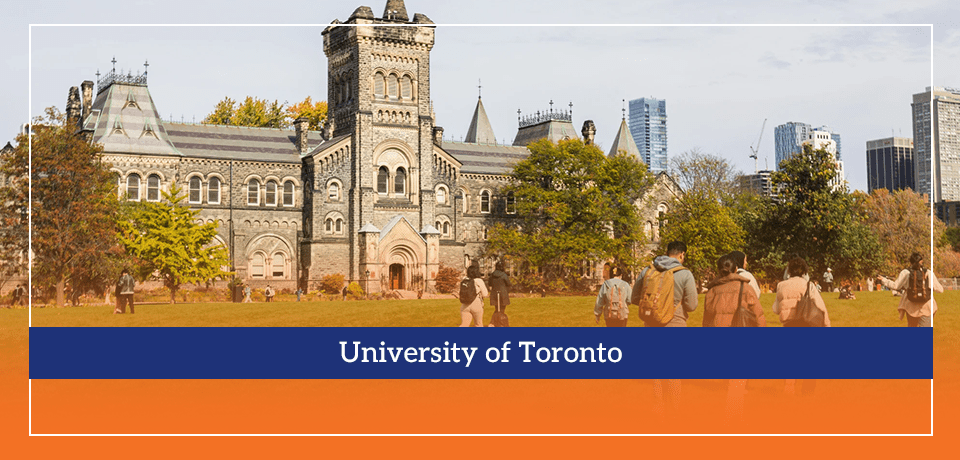
The University of Toronto ranks fourth and offers one of the strongest academic imaging environments outside the United States.
Its Department of Medical Imaging covers undergraduate medical teaching, diagnostic radiology, nuclear medicine, neuroradiology, paediatric radiology and fellowship training across a large hospital network.
International students should check residency eligibility carefully. A strong global ranking does not automatically open every Canadian specialist-training route.
Best for: Broad clinical imaging and postgraduate subspecialty training.
5. Radboud University Nijmegen
Radboud is a less obvious top-five name, but its research performance places it ahead of several universities with greater global brand recognition.
Radboudumc brings anatomy, nuclear medicine and radiology together within its medical imaging department. Its work includes advanced imaging research and links between diagnosis and targeted treatment.
International applicants should verify programme language and professional recognition before applying.
Best for: European medical imaging research and nuclear medicine.
6. University College London
UCL combines medicine with strong routes in medical imaging, physics and artificial intelligence.
Its Artificial Intelligence and Medical Imaging MSc is a one-year programme for graduates from fields such as computer science, engineering and physics. For 2026-2027, tuition is £18,400 for UK students and £39,200 for overseas students.
The MSc does not qualify someone as a clinical radiologist. Applicants who want the physician route should first understand how medical study works in the UK for international applicants.
Best for: Medical imaging, AI and interdisciplinary postgraduate study.
7. University of Pennsylvania
Penn combines clinical radiology with imaging physics, bioengineering and research.
Its education and training routes include medical-student education, residency, fellowships and imaging-physics opportunities. That mix suits future clinicians who also want exposure to quantitative imaging or technology development.
Students leaning towards the engineering side of imaging may also want to compare universities strong in biomedical engineering.
Best for: Clinical radiology, imaging physics and translational research.
8. Heidelberg University
Heidelberg offers a respected university-hospital environment with a very different cost structure from private US medical schools.
Its hospital has a dedicated radiology clinic. Heidelberg states that many non-EU and non-EEA students, where the rule applies, pay €1,500 in tuition per semester. The semester fee for winter 2026-2027 is €189.80, and the university uses €992 per month as a current minimum living-cost planning figure.
German-language ability and professional licensing can matter more than the lower headline tuition.
Best for: Lower-cost European study and a strong university-hospital setting.
9. Imperial College London
Imperial is particularly strong in imaging science, computational modelling and interdisciplinary research.
Its Imaging Sciences group works across MRI, cardiovascular imaging, neuroscience, oncology and related quantitative methods. The environment connects clinicians with engineering, mathematics and computing.
Think about it this way. A future radiologist needs medical and specialist training. A student who wants to improve the scanner, algorithm or model behind the diagnosis may find Imperial more relevant than a conventional clinical programme.
Best for: MRI research, computational imaging and imaging science.
10. University of California, San Francisco
UCSF focuses entirely on health sciences, giving radiology a strongly clinical and research-led setting.
Its radiology education portfolio includes diagnostic radiology, interventional radiology, nuclear medicine, fellowships and biomedical imaging study. UCSF also offers a Master of Science in Biomedical Imaging.
The university is particularly useful for applicants who already know whether they want specialist clinical training or imaging science. It is not a conventional undergraduate choice for a school-leaver seeking a broad bachelor's degree.
Best for: Postgraduate radiology and biomedical imaging research.
Which University Fits Your Goal?
A ranking becomes more useful when you connect it to a career decision.
|
Goal
|
Strong Options to Compare
|
|
Academic radiology and research
|
Harvard, Johns Hopkins
|
|
AI and computational imaging
|
Stanford, UCL, Imperial
|
|
Broad clinical training
|
Toronto, Penn, UCSF
|
|
European imaging research
|
Radboud, Heidelberg
|
|
Biomedical imaging science
|
UCL, Imperial, UCSF
|
|
Lower headline tuition
|
Heidelberg
|
|
US academic medicine
|
Harvard, Stanford, Johns Hopkins, Penn, UCSF
|
The best university for radiology is therefore personal to the route. Number eight may be a better fit than number one if it suits your qualification, language, budget and licensing plans.
Best Universities for Radiology in the USA
The United States has five institutions in the global top ten: Harvard, Stanford, Johns Hopkins, Penn and UCSF. Mount Sinai, UCLA and the University of Michigan also appear in the top 25.
These universities are strong for medical education, specialist radiology training and imaging research. However, best medical schools for radiology and best residency programmes are not exactly the same question. A research ranking measures scholarly performance, while residency applicants also need to consider clinical volume, subspecialty exposure, faculty, research time and eligibility.
If you are comparing countries as well as institutions, looking at the wider medical study options by destination can prevent a strong ranking from becoming a poor practical choice.
What About Colleges and Radiology Programs?
Students searching for the best colleges for radiology, best radiology programs or best radiology schools often mean radiography or radiologic technology, especially in the United States.
In that case, a global research ranking should not be your main filter. Check programme accreditation, clinical placements, certification outcomes, professional registration and total cost.
This is why results for colleges with radiology programs can look completely different from results for universities for radiology. The words overlap, but the career intent may not.
If your goal is to become a physician radiologist, start with medicine. If you want to become a radiographer or technologist, start with an accredited professional programme.
Fees, Living Costs and Funding
Radiology-related costs vary widely because an MD, a radiography degree and an imaging MSc are not equivalent qualifications.
|
University
|
Example Route
|
Latest Published Cost Used Here
|
|
Stanford
|
MD
|
$24,034 per quarter
|
|
Johns Hopkins
|
MD
|
$69,100 annual tuition
|
|
Johns Hopkins
|
First-year MD cost of attendance
|
$111,386
|
|
UCL
|
AI and Medical Imaging MSc, overseas
|
£39,200
|
|
UCL
|
AI and Medical Imaging MSc, UK
|
£18,400
|
|
Heidelberg
|
Applicable international tuition
|
€1,500 per semester
|
|
Heidelberg
|
Semester fee
|
€189.80
|
|
Heidelberg
|
Living-cost planning figure
|
€992 per month
|
These figures are useful for comparison, but they can change before a future intake. Recheck the official fee page before accepting an offer.
Funding can also change from one cycle to another. Johns Hopkins currently states that qualified international medical students may receive institutional loans and scholarships. Elsewhere, eligibility can depend on nationality, course level and academic record.
You can check current study funding options while building your shortlist, then verify the final award directly with the university.

What 2027 Applicants Should Check Before Applying
For the 2027 intake, use the current ranking to build a shortlist and then verify the live course information for the application cycle you actually enter.
Start with the profession. Do you want to become a radiologist, radiographer or imaging scientist? Then confirm the exact qualification, international eligibility, professional recognition, teaching language, clinical access, tuition, living costs and funding.
Deadlines and fees change. The professional route changes much more slowly.
That is what keeps this guide useful beyond one admissions cycle. Even when a new ranking appears, a radiologist will still need medical training, a radiographer will still need the relevant professional qualification, and an imaging researcher will still need a course that matches the technical work.
International applicants who want help comparing those routes can use support for students applying across borders.

Quick Answers About Radiology Universities
Which university is best for radiology?
Harvard University currently ranks first for radiology, nuclear medicine and medical imaging, followed by Stanford and Johns Hopkins. The best personal choice still depends on whether you need medical school, specialist radiology training, radiography or imaging research.
What are the top universities for radiology?
The current top five are Harvard University, Stanford University, Johns Hopkins University, the University of Toronto and Radboud University Nijmegen. UCL, Penn, Heidelberg, Imperial and UCSF complete the global top ten.
What college has the best radiology program?
If you mean radiologic technology or diagnostic radiography, compare accredited professional programmes, clinical placements and outcomes rather than a research ranking. If you mean the medical route to radiology, Harvard, Stanford and Johns Hopkins are among the strongest universities to consider.
Which universities offer radiology programs?
Harvard-affiliated hospitals, Stanford, Johns Hopkins, Toronto, Penn and UCSF offer major radiology education or specialist-training routes. UCL and Imperial are particularly strong for medical imaging research. The exact qualification may be medicine, residency, fellowship, MSc or PhD rather than a bachelor's degree called Radiology.
What are the best radiology programs in the US?
Harvard, Stanford, Johns Hopkins, Penn and UCSF are the highest-ranked US institutions in the current global top ten. Residency applicants should also compare residency-specific factors because a research ranking does not measure every part of specialist clinical training.
Can I study radiology as an undergraduate?
Not if you mean becoming a radiologist. Radiologists first qualify as doctors and then complete specialist radiology training. You can study diagnostic radiography or radiologic technology at undergraduate level to enter a different medical-imaging profession.
Final Choice
The best universities for radiology currently include Harvard, Stanford and Johns Hopkins, but the highest-ranked institution is not automatically the right choice for every student.
Harvard and Johns Hopkins are particularly strong for academic medicine, while Stanford stands out for imaging technology and AI. Toronto and UCSF offer deep postgraduate clinical environments. UCL and Imperial are strong for imaging science, while Heidelberg and Radboud provide distinctive European options.
Choose the profession first. Then choose the qualification, country and university that can actually take you there. If you want to narrow the options around your academic background and budget, you can speak with an adviser about your study route.