The best universities for DPT in the US combine CAPTE accreditation, strong NPTE outcomes, substantial clinical education and costs that students can understand before applying.
For 2026, the University of Iowa is our best overall choice. It reported a 98.9% two-year first-time NPTE pass rate alongside 100% graduation, employment and ultimate pass rates for the 2024–2025 reporting period. Its published programme estimate is also lower than the tuition charged by several leading private universities.
The University of Delaware follows closely. It holds the current No. 1 position in the U.S. News peer ranking, operates two university-based outpatient clinics and reports that all of its DPT graduates have passed the licensing examination.
That does not mean either university is automatically right for you. A student who wants a 32-month medical-campus programme may prefer Northwestern, while someone prioritising transparent public-university costs may shortlist Iowa, Ohio State or UNC–Chapel Hill.
This guide compares the best DPT programs in the US using programme outcomes, tuition fees, clinical experience, length, format and admission fit. The data was checked on 19 July 2026. Before building your shortlist, it may help to understand the wider US study route.
Best DPT Programs in the US at a Glance
Costs do not all measure the same thing. Some universities publish tuition per credit or semester; others publish an estimated total programme cost. Treat the figures below as comparison signals and confirm your personal cost of attendance before accepting an offer.
|
Rank
|
University
|
Length
|
Latest NPTE outcome signal
|
Published tuition or cost signal
|
Clinical advantage
|
Best for
|
|
1
|
University of Iowa
|
2.5 years
|
98.9% first-time; 100% ultimate, 2024–2025 average
|
About $73,152 resident; $119,779 non-resident programme estimate
|
Major academic healthcare environment
|
Best overall balance
|
|
2
|
University of Delaware
|
2.5 years
|
All graduates reported as passing the licensing examination
|
$1,149 per credit for 2026–2027
|
Two university-operated outpatient clinics
|
Integrated patient care
|
|
3
|
The Ohio State University
|
3 years
|
96% first-time; 100% ultimate for 2024
|
Check the current university financial fact sheet
|
Small laboratory ratios and broad specialist exposure
|
Licensing preparation
|
|
4
|
UNC–Chapel Hill
|
36 months
|
93.6% first-time; 100% ultimate for 2025
|
$110,539 in-state; $138,663 out-of-state total estimate
|
36 weeks of clinical rotations
|
Public-university clinical value
|
|
5
|
Emory University
|
35 months
|
92.5% first-time; 99% ultimate, 2024–2025 average
|
$14,633 tuition per semester for 2025–2026
|
30 weeks of full-time clinical internships
|
Clinical and dual-degree options
|
|
6
|
Duke University
|
2 years 10 months
|
89.25% first-time; 98% ultimate, 2024–2025 average
|
$42,000 per year
|
Team-based learning within a medical school
|
Graduate outcomes
|
|
7
|
Northwestern University
|
32 months
|
88.9% first-time; 98.3% ultimate, 2024–2025 average
|
Check the current 2025 financial fact sheet
|
38 weeks of full-time clinical education
|
Intensive urban training
|
|
8
|
Washington University in St. Louis
|
2 years 8 months
|
83.9% first-time; 95.3% ultimate, 2024–2025 average
|
Roughly $137,474–$145,426 before living costs
|
38 weeks across four clinical segments
|
Movement science and research
|
|
9
|
University of Pittsburgh
|
2 years 3 months
|
Campus: 85% first-time, 95.8% ultimate; 2023–2024 average
|
Seven-term tuition varies by residency and format
|
42 weeks of full-time clinical experience
|
Short programme
|
|
10
|
University of Southern California
|
3 years
|
87% first-time; 99.5% ultimate for 2023–2024 residential cohorts
|
About $224,281 tuition in the 2025 financial fact sheet
|
Large clinical network
|
Residential study in California
|
How We Ranked These Physical Therapy Schools
We used six practical factors rather than relying on institutional fame alone:
- NPTE first-time and ultimate pass rates: 30%
- Graduation and employment outcomes: 15%
- Tuition, programme expenses and financial transparency: 20%
- Clinical education: 15%
- Programme length, delivery and admission fit: 10%
- Research environment, specialist exposure and student support: 10%
Here’s the thing: universities do not report every number in the same format. One institution may publish tuition per credit, another may publish tuition for the entire degree, and a third may include fees and required equipment.
Publishing a decimal score from mismatched figures would create false precision. The table therefore shows the evidence behind the editorial order rather than presenting an artificial score such as 92.7 out of 100.
We checked accreditation through the Commission on Accreditation in Physical Therapy Education directory, licensing outcomes through official university disclosures and the Federation of State Boards of Physical Therapy pass-rate resources. Application details were checked through university pages and the American Physical Therapy Association’s PTCAS programme directory.
What Is a DPT Degree?
A Doctor of Physical Therapy is the professional doctorate that prepares graduates to become physical therapists in the United States. Most students complete a bachelor’s degree and the required science prerequisites before entering a graduate DPT programme.
Students study anatomy, physiology, biomechanics, neuroscience, therapeutic exercise, patient assessment and clinical decision-making. They also train in healthcare settings under licensed physical therapists.
The practical element cannot be treated as an afterthought. Reading about gait analysis is useful; recognising why a real patient is losing balance, adjusting the treatment and communicating safely with the family require supervised experience.
After graduation, candidates usually need to pass the National Physical Therapy Examination and meet the licensing rules of the state in which they want to practise.
Top 10 Best Universities for DPT
1. University of Iowa
The University of Iowa DPT programme offers one of the clearest combinations of outcomes and value among the top DPT programs.
For the 2024 and 2025 graduating classes, Iowa reported 100% graduation, 100% employment, a 98.9% first-time NPTE pass rate and a 100% ultimate pass rate. The programme takes about 2.5 years and benefits from its position within a major academic healthcare system.
Its published programme estimate is approximately $73,152 for Iowa residents and $119,779 for non-residents. Around 120 DPT scholarships, worth roughly $400,000 in total, are awarded each year.
Those numbers matter. A prestigious private programme can produce excellent clinicians, but a lower debt burden may give a graduate more freedom to choose a first job, location or specialist residency.
Iowa is therefore our best overall option for applicants who prioritise measurable outcomes, manageable cost and a shorter route.

2. University of Delaware
The University of Delaware DPT programme takes 2.5 years and combines academic study with integrated clinical education.
Its strongest differentiator is practical access. Delaware operates two full-service outpatient clinics on campus: one focuses on sports and orthopaedic care, while the other serves neurological and older-adult patients.
Students work with real patients under faculty and specialist supervision before completing three full-time ten-week clinical experiences.
The university states that all DPT graduates have passed the licensing examination and that 96% of admitted students graduate, based on a ten-year average. The published 2026–2027 tuition rate is $1,149 per credit.
Delaware is our second choice and a particularly strong option for students seeking a highly recognised programme, early patient contact and a strong research environment.
The drawback is that a per-credit figure does not immediately reveal the full cost. Applicants should calculate fees, accommodation, insurance and clinical-placement expenses separately.
3. The Ohio State University
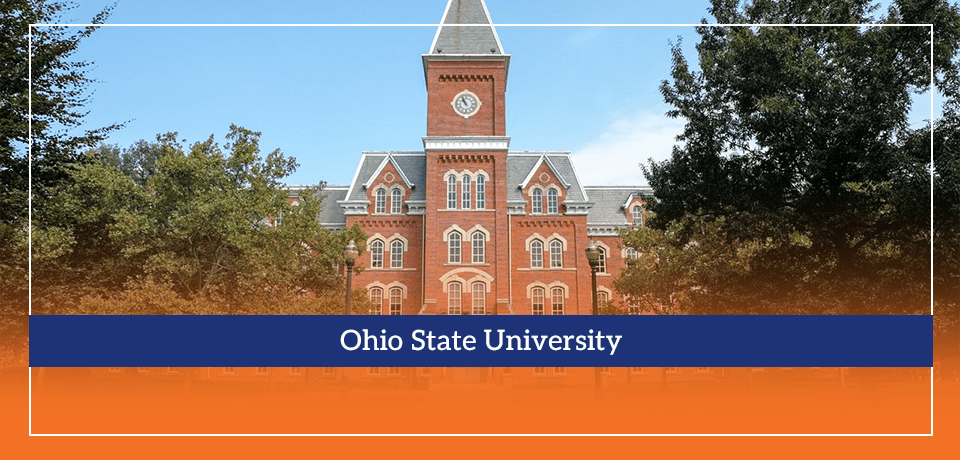
The Ohio State DPT programme runs across nine full-time semesters over three years.
For the 2024 cohort, Ohio State reported a 96% first-time NPTE pass rate and a 100% ultimate rate. Its broader programme statistics also show full employment within six months among graduates and small student-to-faculty ratios of roughly 4:1 to 8:1 in laboratory skills classes.
Recent admitted-student data points to a competitive intake, with an average cumulative GPA around 3.8 and a science and mathematics prerequisite GPA around 3.7.
Ohio State suits students who want a large healthcare setting and access to areas such as orthopaedics, neurology, sports, acute care, oncology and pelvic health.
The official programme page directs applicants to a financial fact sheet rather than presenting one simple total. Compare the complete non-resident cost if you are applying from outside Ohio or outside the US.
4. University of North Carolina at Chapel Hill
The UNC DPT programme requires 36 consecutive months and includes 36 weeks of clinical rotations.
UNC reported a 100% graduation rate, 93.6% first-time NPTE pass rate, 100% ultimate pass rate and 100% employment rate for its 2025 graduates.
Its 2025–2026 financial fact sheet estimated total programme costs of $110,539 for in-state students and $138,663 for out-of-state students. Those figures include tuition, institutional fees and specified programme expenses, but not normal living costs.
UNC is a strong public-university choice for students who want substantial clinical time and unusually clear cost reporting.
Some eligible non-resident students may establish North Carolina residency after their first year, but applicants should never assume they will qualify until they have checked the current residency rules.
Students comparing public options may also find it useful to explore publicly funded universities across the US.
5. Emory University
The Emory DPT programme runs for 35 months and includes 30 weeks of full-time clinical internships.
Its 2024–2025 two-year averages were 97.5% for graduation, 92.5% for first-time licensure, 99% for ultimate licensure and 100% for employment.
For the 2025–2026 academic year, Emory published DPT tuition of $14,633 per semester, with additional university and programme fees. Applicants should count the number of billed semesters rather than treating that figure as an annual charge.
Emory stands out for clinical partnerships across Atlanta and for dual-degree possibilities involving public health, business, bioethics and research. It is particularly suitable for students who want physical therapy training within a wider healthcare and academic network.
A curriculum redesign is planned for students entering from autumn 2027, so future applicants should confirm the length, fee structure and course sequence for their own intake.
6. Duke University
The Duke DPT programme is a two-year, ten-month course within Duke University School of Medicine.
Duke reported a 100% average graduation rate and 100% employment rate for 2024–2025. Its two-year board results were 89.25% first-time and 98% ultimate.
The programme emphasises team-based learning, close faculty contact and collaboration across healthcare disciplines. Published tuition is $42,000 per year, although students must also budget for university fees, insurance, accommodation and daily living costs.
Duke is a strong fit for competitive applicants who want a medical-school environment and consistent graduate outcomes. It is not automatically the best financial choice.
Compare the final cost with Iowa, Ohio State and UNC, particularly if your career plan involves a lower-paid first role or further specialist training.
7. Northwestern University
The Northwestern DPT programme uses a 32-month curriculum based in Chicago.
Its four full-time clinical experiences total 38 weeks: two six-week placements followed by two 13-week placements. Part-time integrated clinical work also begins during the first year.
For the classes of 2024 and 2025, Northwestern reported a 98.85% graduation rate, 98% employment rate, 98.3% ultimate NPTE pass rate and 88.9% first-time pass rate. The class entering in 2025 had an average total GPA of 3.8.
Northwestern is one of the best physical therapy schools for applicants who value an academic medical environment, urban clinical access, movement science and an intensive timetable.
It can also be expensive. Review the university’s current financial fact sheet and likely Chicago living costs before deciding that a shorter programme automatically means a lower total bill.
8. Washington University in St. Louis
The WashU Medicine DPT programme takes about two years and eight months and is built around the human movement system.
Students complete four full-time clinical segments totalling 38 weeks. WashU’s network spans hundreds of clinical locations, while its research environment gives students access to movement science, rehabilitation and interdisciplinary medical work.
For the 2024 and 2025 cohorts, WashU reported a 97.8% graduation rate and 100% employment rate. Its two-year licensing figures were lower than some students might expect from such a famous programme: approximately 83.9% first-time and 95.3% ultimate.
Tuition for students entering in autumn 2025 was $24,314 for each of five academic semesters, plus $3,976–$5,964 for each of four clinical education segments. That places tuition and clinical-segment charges at roughly $137,474–$145,426 before normal living expenses.
This mildly surprising outcome is useful. Reputation tells you about research and peer recognition; it does not replace current licensing data.
9. University of Pittsburgh
The University of Pittsburgh DPT programme is the shortest main option in this ranking, running for two years and three months across seven terms.
Pitt’s on-campus cohorts from 2023–2024 reported 100% graduation and employment, an 85% first-time NPTE pass rate and a 95.8% ultimate rate.
The university also publishes separate hybrid-pathway figures, which were lower over the same period: 67.6% first-time and 91.7% ultimate.
Students complete 42 weeks of full-time clinical experience. That is a substantial amount for a shortened curriculum and remains one of Pitt’s strongest selling points.
The short timetable may reduce some living expenses, but it also creates a demanding pace. Compare the exact tuition for your residency status and delivery format, then add clinical travel and temporary housing.
“Faster” and “cheaper” are not synonyms.
10. University of Southern California
The USC DPT programme remains one of the best-known physical therapy programmes in the US, with a large clinical network and a three-year residential curriculum.
For the 2023 and 2024 residential cohorts, USC reported a 99.5% ultimate NPTE pass rate and an 87% first-time rate. Its 2025 student financial fact sheet listed total tuition of about $224,281 before institutional fees, programme expenses and normal living costs.
There is an important 2026 update. USC is no longer accepting new students into its hybrid pathway; the class of 2028 will be the final hybrid cohort.
New applicants should therefore assess the residential route rather than choosing USC on the assumption that a hybrid place remains available.
USC works best for applicants who specifically value its California location, alumni network and clinical ecosystem and who have a credible funding plan. A recognised name is useful. Unmanageable debt is not.
Best DPT Programs by Student Priority
|
Priority
|
Recommended university
|
Reason
|
|
Best overall balance
|
University of Iowa
|
Excellent recent outcomes, shorter duration and transparent public-university costs
|
|
Best for integrated patient care
|
University of Delaware
|
Two university clinics and a strong licensing record
|
|
Best for licensing preparation
|
Ohio State
|
96% first-time and 100% ultimate rate for 2024
|
|
Best public clinical value
|
UNC
|
36 weeks of rotations and clear total-cost reporting
|
|
Best for dual degrees
|
Emory
|
Public health, business, bioethics and research pathways
|
|
Best medical-school environment
|
Duke
|
Team-based teaching and strong graduation and employment results
|
|
Best intensive urban programme
|
Northwestern
|
32-month curriculum and 38 weeks of full-time clinical education
|
|
Best for movement-science research
|
WashU
|
Distinct human movement system and major research environment
|
|
Best short programme
|
Pittsburgh
|
Seven terms and 42 weeks of clinical education
|
|
Best California network
|
USC
|
Large clinical ecosystem and strong ultimate NPTE outcomes
|
Five More Strong DPT Schools to Consider
A list of the top 10 physical therapy schools cannot fit every good programme.
The University of Miami, University of Florida, University of Alabama at Birmingham, Creighton University and MGH Institute of Health Professions are also credible choices with CAPTE-accredited routes and established clinical education.
They belong on a wider shortlist when location, prerequisites, specialist interests or total cost make one of the main ten a poor fit.
This is also why “best colleges for physical therapy” and “best DPT schools” are not always identical searches. Some students want an undergraduate pre-physical-therapy route, while others already hold a bachelor’s degree and need an entry-level Doctor of Physical Therapy programme.
Admission Requirements for DPT Programs
Most DPT universities require a completed bachelor’s degree before enrolment, although the undergraduate subject can vary. Biology, kinesiology, exercise science and health science are common backgrounds, but meeting the prerequisites matters more than the degree title.
Typical requirements include anatomy and physiology, biology, chemistry, physics, psychology and statistics. Universities may also ask for observation hours, references, a personal statement, an interview and evidence of English proficiency.
Minimum GPAs are often around 3.0. Competitive averages can be much higher. Northwestern’s 2025 entering class and recent Ohio State cohorts, for example, reported average GPAs near 3.8.
A concrete example helps. An applicant with a 3.6 GPA, 100 observation hours across an outpatient clinic and a neurological rehabilitation setting, and a clear explanation of why physical therapy suits them may present a stronger professional case than someone with a 3.8 GPA and almost no exposure to patients.
Do not leave PTCAS preparation until the final week. Transcript verification and references can take time, and one missing prerequisite can stop an otherwise strong application.
DPT Tuition Fees, Scholarships and Total Cost
Across the universities in this guide, published tuition or programme estimates range from roughly $73,000 for an Iowa resident to more than $224,000 in USC tuition before some additional expenses.
The headline number is only the start. Add mandatory fees, health insurance, books, equipment, background checks, licensing costs, accommodation and travel to clinical placements.
Think about it this way: a programme costing $20,000 less can lose much of that advantage if the student must fund repeated long-distance clinical travel or live in a much more expensive city.
Scholarship support can still make a meaningful difference. Iowa reports approximately $400,000 in annual DPT scholarships, while WashU states that it distributes more than $600,000 in DPT scholarship funding each year. Individual awards may reduce the bill without covering the full degree.
Before accepting an offer, compare funding opportunities for study in America and make room in your budget for American student health cover.
Best Universities for DPT for International Students
International applicants need to check more than academic ranking.
First, confirm that the programme accepts international degrees and identify the credential-evaluation service it requires. Then compare prerequisite equivalency, English-language evidence, non-resident fees and whether the university can issue the documentation needed for your visa.
Observation-hour rules vary too. One programme may accept verified experience completed abroad; another may prefer US clinical exposure.
Applicants should ask:
- Does the university accept my bachelor’s degree and prerequisite courses?
- Is TOEFL, IELTS or another English test required?
- Can I complete clinical placements under my visa conditions?
- Does the programme accept international students into every delivery format?
- What will I pay as a non-resident?
- Which state licensing requirements will apply after graduation?
Students comparing tests can check alternative English-language options accepted in the US. Those who need practical support may also explore visa and immigration planning and student accommodation services.
Eligibility comes before prestige. A university cannot be your best option if you cannot enter its programme, fund the course or use the qualification in your intended state.
Are Online or Hybrid DPT Programs Available?
Some universities offer hybrid DPT programs, combining online academic study with mandatory in-person laboratory sessions and clinical placements. A legitimate entry-level DPT is not a screen-only qualification.
Pitt publishes separate outcomes for its campus and hybrid pathways. Those figures show why students should compare the exact format rather than the university-wide reputation.
USC provides another lesson in checking current information: it will support existing hybrid students through May 2028, but it is no longer accepting new students into that pathway.
Before applying to any hybrid programme, verify CAPTE status, immersion locations, travel costs, clinical-placement support, pathway-specific NPTE results and international-student eligibility.
Do DPT Program Rankings Really Matter?
Yes, but less than many applicants assume.
Rankings can identify respected faculties, research environments and programmes with strong peer recognition. They cannot tell you whether the tuition is sensible for your finances, whether your prerequisites match or whether the clinical placements support your intended specialty.
A mildly counterintuitive point is that a lower-ranked programme with a better first-time NPTE rate and substantially lower cost may be the more rational choice.
Use DPT program rankings to create a shortlist. Use accreditation, outcomes, debt and clinical fit to choose from it.
Career Outlook After a Doctor of Physical Therapy Degree
Physical therapists work in hospitals, private practices, rehabilitation centres, nursing facilities, schools, sports settings and home health services.
The US Bureau of Labor Statistics reported a median annual wage of $101,020 in May 2024 and projected 11% employment growth between 2024 and 2034.
The numbers are encouraging, but the work remains human and physical. A therapist may spend several sessions helping a patient regain only a small amount of movement.
That improvement can still determine whether the person climbs stairs, returns to work or manages daily tasks without assistance.

How to Choose the Right DPT University
Start with CAPTE accreditation. Then compare the first-time and ultimate NPTE rates for the exact programme and format you plan to enter.
Next, calculate the total cost. Do not compare one university’s tuition-only figure with another university’s tuition-plus-fees estimate.
Review the clinical curriculum after that. Look at the number of weeks, types of placement, who arranges them and whether they match your interests in sports, paediatrics, neurology, older-adult care or another area.
Finally, compare admission fit and location. A balanced shortlist normally contains one or two highly competitive choices, two value options, one programme aligned with your clinical interests and at least one realistic alternative.
Students who are still comparing the broader market can review US universities that regularly support overseas applicants.

Frequently Asked Questions
What are the best universities for DPT in the US?
The University of Iowa, University of Delaware, Ohio State, UNC–Chapel Hill, Emory, Duke, Northwestern, WashU, Pittsburgh and USC are among the best universities for DPT in this 2026 comparison.
Iowa ranks first for its combination of recent NPTE results, graduate outcomes, duration and published costs.
What are the best DPT programs in the US?
The best DPT programs in the US are CAPTE-accredited programmes with strong NPTE, graduation and employment outcomes, substantial clinical education and transparent costs.
No single programme is best for every student.
What are the top 10 physical therapy schools in the US?
Iowa, Delaware, Ohio State, UNC, Emory, Duke, Northwestern, WashU, Pittsburgh and USC are established physical therapy schools with recognised DPT programmes.
Their strengths differ across licensing outcomes, research, clinical training, programme length and cost.
Which DPT programme has the highest recent first-time NPTE pass rate?
Among the ten programmes compared here, Iowa reported the highest recent two-year first-time rate at 98.9% for the 2024 and 2025 graduating classes. Ohio State reported 96% for 2024.
How long does a DPT programme take?
Most entry-level DPT programmes take about 2.5 to three years after a bachelor’s degree. Pitt takes two years and three months, while Northwestern runs for 32 months.
How much does a DPT degree cost in the US?
Published programme costs and tuition signals in this comparison range from about $73,000 for an Iowa resident to more than $224,000 in USC tuition.
Fees, insurance, accommodation and clinical travel can increase the final cost.
What GPA is needed for DPT school?
Many programmes publish a minimum GPA near 3.0, but competitive applicants often have higher results. Recent Northwestern and Ohio State intake data showed averages close to 3.8.
Is CAPTE accreditation important?
Yes. CAPTE accreditation is a central check when choosing an entry-level US DPT programme because it supports the standard educational route towards the NPTE and state licensure.
Are hybrid DPT programs easier?
No. Hybrid students still complete practical laboratories, assessments and clinical placements. Flexibility does not remove the academic or hands-on requirements.
Can international students study DPT in the US?
Some universities accept international applicants, but requirements differ. Check credential evaluation, prerequisites, English tests, visa support, non-resident costs and state licensing before applying.
Which DPT programme is ranked number one?
Under the evidence-led method used in this guide, the University of Iowa ranks first because of its recent NPTE results, 100% graduation and employment outcomes, shorter duration and comparatively transparent costs.
The University of Delaware holds the current No. 1 U.S. News peer-ranking position, which uses a different methodology.
What is the difference between the best colleges for physical therapy and DPT schools?
A college may offer an undergraduate major or pre-physical-therapy pathway, while a DPT school delivers the graduate professional degree used for entry into US physical therapy practice.
Students who already hold a bachelor’s degree usually need to compare entry-level DPT programmes rather than undergraduate colleges.
Final Verdict
The best universities for DPT should help students do four things: graduate, pass the NPTE, gain meaningful clinical experience and manage the financial consequences of the degree.
Iowa is our best overall choice for 2026 because it combines recent licensing outcomes, graduate success, a shorter route and comparatively transparent costs. Delaware follows for integrated patient care and national recognition, while Ohio State performs strongly for licensing preparation.
UNC provides a transparent public-university cost structure, and Pitt offers the shortest main route in this ranking.
Do not choose from reputation alone. Compare the programme you can enter, afford and use towards licensure in the state where you intend to work.
Students who want help narrowing the list can discuss their study options with an adviser.