The advantages and disadvantages of studying abroad should be understood clearly before any student chooses an overseas degree, semester exchange, or international pathway programme. Studying abroad can provide access to internationally recognised universities, global career opportunities, cultural exposure, language development, and personal growth. At the same time, it can also bring challenges such as tuition fees, living costs, academic pressure, homesickness, culture shock, and adapting to a new learning environment.
For international students, the real question is not whether studying abroad is good or bad in general. The real question is whether the academic value, career outcomes, and personal development opportunities offered by an international education experience are strong enough to justify the investment and commitment involved. That is why students and families should carefully evaluate course choices, university reputation, funding and scholarship opportunities, accommodation options, and overall study experience before making a final decision.
Quick Overview of the Advantages and Disadvantages of Studying Abroad
Before going into detail, here is a simple overview of the main benefits and challenges of studying abroad.
Advantages of studying abroad
- Access to globally recognised universities and specialised courses
- Better exposure to international education systems and learning environments
- Improved employability, career prospects, and communication skills
- Personal growth, independence, confidence, and life skills development
- Opportunity to build a global academic and professional network
- Stronger language development through everyday communication and cultural immersion
- Exposure to new cultures, teaching methods, and diverse perspectives
Disadvantages of studying abroad
- High tuition fees and living expenses
- Academic pressure and the challenge of adapting to a new education system
- Homesickness, loneliness, and emotional adjustment
- Culture shock and language barriers
- Difficulty adjusting to different teaching styles and academic expectations
- Challenges related to accommodation, healthcare access, and personal wellbeing
- Distance from family and existing support networks
What Does Studying Abroad Really Mean?
Studying abroad can take different forms. Some students go for a short-term exchange programme, summer school, language course, foundation course, or semester abroad. Others move for a full undergraduate degree, postgraduate degree, diploma, or research programme at an international university.
No matter the format, the same decision applies. Students need to compare the academic and career benefits with the tuition fees, living costs, social adjustment, learning environment, and long-term return on investment.

7 Major Advantages of Studying Abroad
1. Access to better academic opportunities
One of the biggest advantages of studying abroad is access to universities, academic departments, laboratories, and course structures that may not be available in a student’s home country. Some students choose to study abroad because they want a specialised course, stronger faculty, better research opportunities, or internationally recognised qualifications.
This can be especially useful in fields such as business, engineering, medicine, computer science, public health, law, media, and hospitality.
2. Global recognition of qualifications
A degree from a recognised international university can strengthen a student’s academic profile. Depending on the country, institution, and subject area, a foreign qualification may improve access to international employers, postgraduate study, and professional development opportunities.
This is one reason many students compare destinations such as the UK, USA, Canada, Australia, New Zealand, and European countries before applying.
3. Better career exposure and employability
Studying abroad can improve employability when the course is relevant and well aligned with career goals. Employers often value graduates who can demonstrate adaptability, intercultural awareness, communication skills, and confidence in unfamiliar environments.
International students may also gain exposure to:
- career services
- internships
- alumni networks
- employer events
- industry placements
- research or project-based learning
4. Personal growth and independence
Living in another country teaches students how to handle responsibility in a practical way. They learn to manage money, deadlines, accommodation, public transport, shopping, healthcare systems, and official documents independently.
This often leads to:
- stronger problem-solving skills
- improved time management
- greater emotional maturity
- more confidence in decision-making
5. Cultural exposure and global perspective
Another major advantage of studying abroad is the chance to experience a different culture closely rather than only reading about it. Students interact with new customs, values, social norms, food, teaching methods, and communication styles.
This cultural intelligence is increasingly valuable in international education, global business, diplomacy, technology, and multinational work environments.
6. Language development
For many students, studying abroad improves both academic and everyday language skills. Students in English-speaking destinations often develop better fluency in academic English, presentation skills, essay writing, and interview communication. Students in non-English-speaking countries may gain exposure to an additional language through daily life.
Language development often becomes one of the most practical long-term benefits of international study.
7. International networking
Studying abroad helps students build relationships with classmates, professors, university staff, researchers, and professionals from different countries. These networks can support future collaboration, references, postgraduate opportunities, and employment.
A strong international network can be especially valuable for students who want a cross-border career or future migration options.
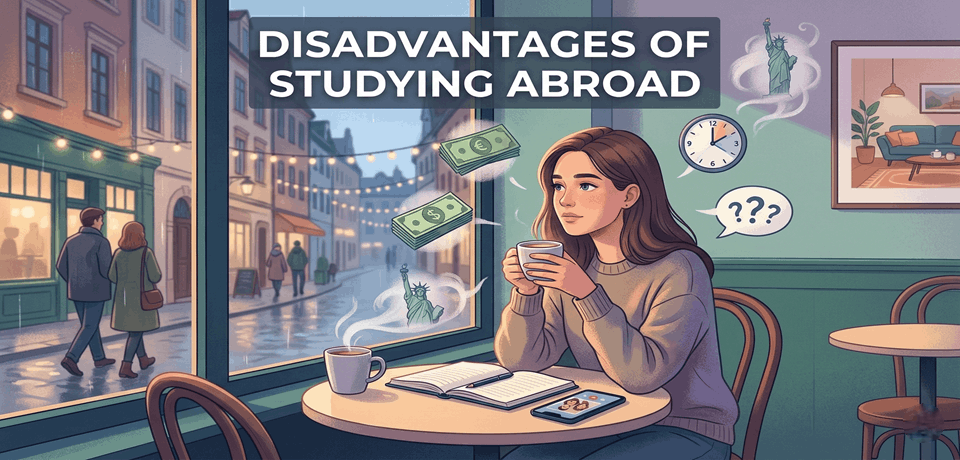
7 Main Disadvantages of Studying Abroad
1. High tuition fees and living costs
The biggest disadvantage of studying abroad for many students is financial pressure. Tuition fees are only one part of the overall cost. Students must also plan for accommodation, food, flights, health insurance, transport, books, deposits, and unexpected expenses.
This is why proper financial planning is important. Resources such as typical living costs for international students in the UK can help students understand potential expenses and prepare realistic budgets. Students should also explore available funding and scholarship opportunities and compare different study destinations before making an application decision.
2. Admission and documentation challenges
Applying to study abroad can be stressful and time-sensitive. The process may involve preparing academic records, language test scores, application documents, financial planning, and meeting university-specific requirements.
Delays or incomplete documentation can affect the overall study plan, so students should start early, stay organised, and carefully follow the official guidance provided by their chosen university and education providers.
3. Homesickness and loneliness
Moving away from home can be emotionally difficult. Students may miss their family, language, food, culture, routine, and community. Homesickness is common, especially during the first few months or around major holidays.
Without a support system, loneliness can affect motivation, confidence, and academic performance.
4. Culture shock
Culture shock is one of the most common disadvantages of studying abroad. Students may struggle with unfamiliar classroom behaviour, social etiquette, food habits, weather, communication styles, and daily routines.
Even small differences can feel overwhelming at first. Some students adjust quickly, while others take longer to feel settled.
5. Academic adjustment
Different countries often have different expectations around independent study, attendance, critical thinking, classroom discussion, research, plagiarism rules, and assessment methods. A student who performs well at home may still need time to adapt abroad.
Understanding the education system before departure can reduce this risk.
6. Healthcare, housing, and safety concerns
Studying abroad also involves practical responsibilities beyond academics. Students need to understand the local healthcare system, health insurance requirements, housing contracts, tenancy rules, and safety measures.
Ignoring these factors can lead to stress, unexpected costs, or poor living conditions.
7. Distance from family support
When problems happen abroad, students cannot always rely on immediate help from family or trusted people. Illness, stress, financial problems, accommodation issues, or academic difficulties may feel more difficult to manage from a distance.
This lack of direct support is one of the most overlooked disadvantages of studying abroad.
Academic Advantages of Studying Abroad
The academic advantages of studying abroad go beyond prestige. Students often gain access to:
- specialised modules
- practical learning environments
- research funding
- better library and laboratory resources
- international faculty
- diverse classrooms
- different academic methodologies
This can help students broaden their subject knowledge and approach learning in a more global way.
Career Benefits of Studying Abroad
The career value of studying abroad depends on the course, university, location, and student effort. However, the most common career-related benefits include:
- stronger CV value
- international exposure
- better communication skills
- confidence in multicultural workplaces
- access to global alumni communities
- improved adaptability and resilience
Students who use career services, internships, networking events, and project opportunities tend to benefit more than students who focus only on classroom attendance.
Financial Disadvantages of Studying Abroad
Financial pressure can affect the overall study abroad experience. Students should calculate the full cost of attendance, not just tuition fees, before planning their international education journey.
Common costs include
- tuition fees
- accommodation
- food and groceries
- health insurance
- airfare
- local transport
- course materials
- winter clothing or setup costs
- emergency savings
Students who need additional support may explore scholarship opportunities, funding options, family support, or other suitable financial planning resources. A related resource that may help is funding your studies abroad as a Bangladeshi student.
Personal Growth Benefits of Studying Abroad
One of the most talked-about advantages of studying abroad is personal transformation. Students often return with:
- more independence
- stronger self-confidence
- better adaptability
- improved communication
- greater cultural sensitivity
- more clarity about future goals
These qualities are difficult to measure, but they can have a lasting impact on academic, personal, and professional life.
Common Considerations Students Should Evaluate
Before applying, students should think carefully about:
- whether the course matches their long-term academic and career goals
- whether the destination and overall study experience are affordable
- whether they can adapt emotionally and practically to a new environment
- whether they understand the university requirements and application process
- whether they have researched healthcare, housing, and available support services
- whether they are choosing a country based on education quality rather than trend
A study abroad decision should be based on reliable research, personal goals, and informed planning, not only on social media influence or popularity.
Is Studying Abroad Worth It?
Studying abroad is worth it for many students, but not for all students. It is usually worth it when the educational value, future career potential, international exposure, and personal growth clearly justify the cost and adjustment challenges.
It may be worth it if:
- The course is stronger than local alternatives
- The qualification has clear academic or career value
- The student has realistic financial planning
- The country offers good support for international students
- The student is mentally prepared for independence and change
It may not be the best choice if:
- The cost creates major long-term pressure
- The course has little career value
- The student has not researched the destination properly
- The decision is being made only for prestige or trends
How to Decide Between Studying Abroad and Studying at Home
Students should compare both options honestly. Studying at home may be the better choice when:
- Local universities offer strong programmes
- Cost is a major concern
- Family responsibilities make relocation difficult
- The student wants to build a local network first
- The international option does not offer strong added value
Studying abroad should not be treated as automatically better. It should be treated as one option among several educational pathways.
Practical Checklist Before You Apply
Before starting your study abroad application, make sure you have checked:
- course quality
- tuition fees
- scholarship and funding options
- entry requirements
- English language requirements
- university application requirements
- accommodation options
- healthcare and insurance requirements
- work opportunities during study (where applicable)
- post-study opportunities
Students still exploring destination options may also want to explore our detailed guides on studying in the UK as an international student or studying in Australia as an international student to understand university options, course choices, and the overall study experience in different destinations.

Frequently Asked Questions
What are the main advantages of studying abroad?
The main advantages of studying abroad include better academic opportunities, global exposure, language development, stronger employability, international networking, and personal growth.
What are the biggest disadvantages of studying abroad?
The biggest disadvantages of studying abroad include tuition fees, living costs, homesickness, culture shock, academic adjustment, adapting to a new education system, and being away from family support.
Is studying abroad good for career growth?
Yes, studying abroad can support career growth when the programme is relevant, the institution is credible, and the student uses academic and networking opportunities effectively.
Is studying abroad expensive?
Yes, studying abroad can involve high costs because students must consider not only tuition fees but also accommodation, transport, health insurance, and daily living expenses. The overall cost can vary depending on the country, university, course type, and lifestyle choices.
Can international students work while studying abroad?
In many destinations, international students may have opportunities to work part-time while studying, but eligibility and conditions vary depending on the country, institution, and local regulations. Students should always check official government and university guidance to understand available work opportunities and any applicable requirements before making financial plans based on employment.
Is studying abroad worth it for international students?
It can be worth it if the academic, career, and personal advantages of studying abroad are greater than the financial and emotional disadvantages of studying abroad.
Conclusion
The advantages and disadvantages of studying abroad should be carefully considered before making a final decision. The benefits include academic opportunities, international exposure, employability, cultural awareness, language development, and personal growth, while challenges may include costs, homesickness, culture shock, and adapting to a new environment.
Ultimately, studying abroad decisions depend on your goals, budget, subject choice, and readiness for change. For expert guidance on university options, course selection, funding and scholarship opportunities, and international education pathways, BHE UNI offers personalised support through its free consultation service.