Harvard, Oxford and Stanford lead the best medical colleges in the world in the QS Medicine rankings for 2026. Johns Hopkins, Cambridge, UCL, Imperial College London, UCSF, Yale and Karolinska Institutet complete the top ten.
But their medical degrees follow very different routes. Some accept applicants after secondary school; others require university study first. One teaches its medical programme entirely in Swedish.
If you are comparing the best medical schools in the world for 2027 entry, start with the ranking, then check whether the course fits your qualifications, language skills and budget. This comparison brings those decisions together, with published fee examples and the admissions dates that need attention first.
Top 10 Medical Schools in the World
The table follows the QS World University Rankings by Subject 2026 for Medicine. It uses the medicine subject ranking, rather than each university's overall position. The entry routes describe the main medical programmes, not every alternative pathway.
|
QS Medicine 2026 rank
|
University
|
Country
|
Main medical degree and entry route
|
|
1
|
Harvard University
|
USA
|
MD, following undergraduate study
|
|
2
|
University of Oxford
|
UK
|
BM BCh, standard six-year undergraduate course
|
|
3
|
Stanford University
|
USA
|
MD, following undergraduate study
|
|
4
|
Johns Hopkins University
|
USA
|
MD, following undergraduate study
|
|
5
|
University of Cambridge
|
UK
|
MB BChir, standard six-year undergraduate course
|
|
6
|
UCL
|
UK
|
MBBS BSc, standard six-year undergraduate course
|
|
7
|
Imperial College London
|
UK
|
MBBS BSc, six-year undergraduate course
|
|
8
|
University of California, San Francisco
|
USA
|
MD, following undergraduate study
|
|
9
|
Yale University
|
USA
|
MD, following undergraduate study
|
|
10
|
Karolinska Institutet
|
Sweden
|
Six-year medical programme, taught in Swedish
|
Several of these top medical colleges in the world operate as schools or faculties within larger universities. The table compares institutions for medicine; it does not imply that they all award an MBBS or accept students at the same stage of education.
How QS and THE Medical Rankings Differ
There is no single universal ranking of the best medical universities in the world. QS places Harvard first for Medicine in 2026, while the Times Higher Education Medical and Health ranking puts Oxford first, Cambridge second and Harvard third.
The tables measure different things. THE covers a broader field, including dentistry and other health disciplines, and assesses teaching, research and related institutional performance. Neither table tells you whether a particular admissions office will accept your qualifications.
Use rankings to identify strong institutions. Then compare the actual medical course, especially its clinical teaching, research opportunities and eligibility rules.

Comparing the Top Medical Schools in the World
Durations below describe the medical programme itself. US MD timelines exclude the undergraduate study completed beforehand; research, dual degrees and alternative routes can change the total time.
1. Harvard University: Harvard Medical School
Degree: MD. Duration: 4 years; extended study options. Entry: Graduate entry after undergraduate study.
Harvard Medical School offers two MD tracks, Pathways and Health Sciences and Technology, or HST. Its curriculum overview explains the distinction: Pathways combines active learning, early clinical experience and a scholarly project, while the joint Harvard-MIT HST route emphasises quantitative biomedical science and research.
That is a meaningful choice within one medical school. A student interested in applying physical or molecular science to medicine should examine HST closely; someone seeking the Pathways approach should look at how its clinical experience and project fit their interests.
2. University of Oxford
Degree: BM BCh. Duration: 6 years, standard course. Entry: Undergraduate entry.
Oxford's six-year medicine course separates the initial medical sciences stage from later clinical training and leads to the BM BCh qualification. Its standard A-level requirement is A*AA, and applicants must take the UCAT.
This route deserves attention if you enjoy understanding the science behind clinical decisions. International applicants should also check the overseas places limit, not just the grades: meeting the academic requirement does not mean the university has many places available for your fee category.
3. Stanford University
Degree: MD. Duration: 4 or 5 years through Discovery Curriculum pathways. Entry: Graduate entry after undergraduate study.
Stanford's Discovery Curriculum offers two- or three-year pre-clerkship pathways, followed by two years of clerkships. The longer pathway creates time for research, scholarship or a dual degree. Clinical training begins in the first year, so flexibility does not mean postponing every patient-facing experience.
Funding needs a separate application strategy. Stanford explains that Knight-Hennessy Scholars can receive up to three years of funding and that applicants must apply to both the scholarship and their degree programme. That is a substantial opportunity, but it does not promise funding for an entire medical degree.
4. Johns Hopkins University
Degree: MD. Duration: 4 years, standard programme. Entry: Graduate entry after undergraduate study.
Johns Hopkins structures its MD teaching around the Genes to Society curriculum, connecting biological mechanisms with the wider influences on health and disease. That approach encourages students to consider the patient alongside the science.
Its financial aid announcements also attract attention. Read the eligibility conditions before adding a scholarship to your budget, particularly if you are an international applicant. The university's widely publicised income-based tuition support does not apply to every student, as the funding section below explains.
5. University of Cambridge
Degree: MB BChir. Duration: 6 years, standard course. Entry: Undergraduate entry.
Cambridge's medicine course information sets out a standard six-year route leading to MB BChir. The course builds a scientific foundation before the later clinical years. For 2027 entry, the minimum A-level offer is AAA, and applicants must take the UCAT.
College requirements can differ. Check the subjects and conditions for the college you intend to apply to, rather than relying on the university-wide minimum alone. Cambridge merits consideration if you want substantial scientific study within your medical education.
6. UCL
Degree: MBBS BSc. Duration: 6 years, standard course. Entry: Undergraduate entry.
UCL's medical degree combines an MBBS with an intercalated BSc. The standard course lasts six years, with the BSc in the third year and patient contact beginning early in the programme.
Teaching spans Bloomsbury, the Royal Free Hospital in Hampstead and the Whittington Hospital in Archway. The intercalated year adds focused scientific study, while the later years become increasingly placement-based. Consider that combination of research and clinical training alongside London's living and travel costs.
7. Imperial College London
Degree: MBBS BSc. Duration: 6 years. Entry: Undergraduate entry.
Imperial integrates medical training with a BSc and introduces clinical skills and patient experience early. Its 2027 course listing describes case-based learning, with students applying scientific knowledge to clinical care as the course develops.
The listed A-level requirement is AAA, including Biology and Chemistry, with the A in either subject. Applicants also need the UCAT. If Imperial and UCL both make your shortlist, compare their teaching sequences and opportunities for scientific study before deciding which environment fits you better.
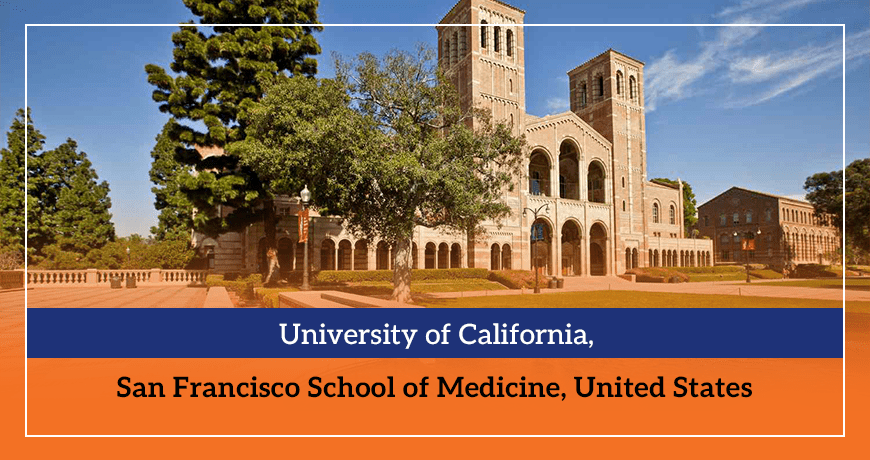
8. University of California, San Francisco
Degree: MD. Duration: 4 years, standard programme. Entry: Graduate entry after undergraduate study.
UCSF's four-year Bridges curriculum moves through Foundations 1, Foundations 2 and Career Launch. It combines basic and clinical sciences with patient care, enquiry and improvements to healthcare delivery.
The distinction matters: this is the University of California, San Francisco, not UC Berkeley or UCLA. When researching the top medical universities in the world, check the campus as carefully as the university name. Their medical education arrangements and application routes are not interchangeable.
9. Yale University
Degree: MD. Duration: 4 years, with an extended-study option. Entry: Graduate entry after undergraduate study.
Yale's approach to medical education centres on small-group learning and student responsibility. The first eighteen months have no grades, and the school does not rank students within the class. Assessment still matters: students must demonstrate the required knowledge and clinical skills.
Its extended-study option allows an additional year for research, clinical experiences or coursework without additional MD tuition. Living expenses still need funding. That distinction is useful when comparing a four-year timetable with a course that gives you more time for an academic interest.
10. Karolinska Institutet
Degree: Professional medical degree. Duration: 6 years. Entry: School-leaving qualifications plus Swedish proficiency.
Karolinska Institutet presents a crucial language distinction. Its medical programme guidance confirms that the six-year course runs entirely in Swedish and requires the relevant Swedish language qualification or equivalent.
An English-taught biomedicine degree is not an alternative route to the same medical qualification. This is easy to miss when browsing international programme pages. If you cannot study and communicate with patients in Swedish, resolve that barrier before spending time on a Karolinska medical application.
Undergraduate or Graduate Entry: Which Route Fits You?
The best medical school in the world for a school-leaver may differ from the best option for someone who already holds a bachelor's degree.
Oxford, Cambridge, UCL and Imperial offer standard undergraduate medicine routes. The US schools in this comparison sit later in the education pathway, normally after a bachelor's degree and the required preparation for medical school.
For example, a student finishing A levels could investigate direct entry to Oxford's medical course. That same student should not treat Harvard's MD as an equivalent application immediately after school.
Degree names can add to the confusion. Understanding how MD and MBBS qualifications fit different education systems helps you compare like with like.
International access also varies. The AAMC reports that only 43 US medical schools indicated that they accepted international applications in 2025. Its guidance on applying with international qualifications explains additional coursework and financial considerations. Check eligibility before preparing a school-specific application.
Admissions Requirements to Compare
Use these checks to turn a ranking shortlist into an application plan:
- Academic preparation: confirm accepted qualifications, required science subjects and, for graduate entry, prerequisite university coursework.
- Admissions tests: distinguish the UCAT for the UK courses above from the Medical College Admission Test, or MCAT, used by US medical schools.
- Application route: UK applicants use UCAS; most US medical schools use the American Medical School Application Service, or AMCAS, followed by school-specific requirements.
- Selection and language: check interview arrangements, references and any English language evidence the course requires. Karolinska's Swedish requirement remains a separate consideration.
Do not assume one published minimum gives you an admission probability. Your qualifications may establish eligibility, while tests, interviews and the wider application determine how the school assesses you.
Tuition Fees, Living Costs and Scholarships
Compare the total budget, not just tuition. These published examples show why the distinction matters; they are not estimates of what every student will pay.
|
Institution
|
Published tuition
|
Wider budget or qualification
|
|
UCL
|
£59,600 per year, listed for overseas entrants in 2027/28
|
Tuition only; living expenses, placement travel and other costs are additional
|
|
Johns Hopkins
|
US$69,100 for 2026/27
|
First-year MD cost of attendance: US$111,386
|
|
Yale
|
US$76,700 for 2026/27
|
First-year MD total budget: US$120,448
|
|
Karolinska Institutet
|
SEK 1,560,000 for the full six-year programme
|
Published programme tuition for fee-paying students, not an annual figure; living costs are additional
|
UCL's published course fee information lists the UK example above. The page carries a saved-copy notice, so reconfirm the fee and applicable terms with UCL before committing funds. It is a published planning figure, not a guaranteed whole-degree quotation.
Johns Hopkins separates direct and indirect expenses in its medical student cost breakdown. Yale's 2026/27 student budget also shows different totals for different years. Do not multiply one first-year figure and assume it gives an exact whole-degree cost.
The US figures above provide a planning baseline, not confirmed 2027/28 fees. Allow separately for future increases and currency movements if your family earns in another currency.
What Funding Can Actually Cover
At Johns Hopkins, eligible students from families earning below US$300,000 may qualify for tuition support, while those below US$175,000 may qualify for support covering the full cost of attendance. Assets and other conditions matter. Crucially, its financial aid eligibility rules exclude international MD students from this particular programme; separate funding arrangements apply.
Karolinska states that it offers no scholarships for its medical programme. EU/EEA citizens generally do not pay its tuition fees, but living expenses still need funding.
Here is the counterintuitive part: a university with higher published tuition can sometimes cost an eligible student less after aid. Compare your likely net cost only after the university confirms what you qualify for.
Planning for 2027 Medical School Entry
The ranking year and entry year are different. A 2026 subject ranking can inform a 2027 application, but it does not make the list a “2027 medicine ranking”.
For the UK courses discussed here, the admissions timetable starts well before the course begins. The UCAT dates for the 2026 testing cycle include:
- 16 September 2026, 15:00 UK time: booking closes.
- 24 September 2026: the final testing day.
- 15 October 2026, 18:00 UK time: the UCAS medicine application deadline.
You must organise the test before the application deadline arrives. If you are preparing a UK application, work through the requirements for overseas medicine applicants alongside each university's current instructions.
US schools follow their own application calendars. Check the relevant MD admissions page for primary and supplementary deadlines rather than applying the UK timetable to them. Likewise, do not assume medicine offers the same January or September intake choices as other degrees.
How to Build a Realistic Medical School Shortlist
Start with eligibility. Remove courses that do not accept your qualifications, language level or applicant category. Then compare:
- Clinical teaching: when patient contact begins and how hospital placements fit into the course.
- Learning and research: the balance between structured teaching, independent study and projects.
- Affordability: the full programme budget and funding you can actually access.
Finally, check the steps needed to practise where you intend to work. A course can suit your academic interests while still requiring additional examinations or training for your chosen destination.
A practical observation: a ranking table cannot show you what a long commute to a clinical placement will feel like. Accommodation and travel deserve attention before you commit to a city.
Check Recognition Before Committing
A high ranking does not give a graduate automatic permission to practise abroad. For example, the UK's General Medical Council assesses overseas qualifications against its own criteria and explicitly states that it does not accredit overseas medical education. Follow its guidance on checking an overseas qualification, rather than relying on a recruitment claim that a course is “GMC recognised”.
If you plan to return home after studying, check the medical regulator's current requirements there before accepting an offer or paying a deposit.
If you are still deciding where to study, compare the training routes and practical demands across different countries. Once you have chosen a destination, build a balanced list within it.
Do not stop at the global top ten. You can also investigate medical faculties across Canada or the options available in Australia, checking international eligibility for each course. A global ranking is a starting point for that search, not a complete list of worthwhile medical schools.

Frequently Asked Questions
What Is the Best Medical School in the World?
Harvard Medical School holds the number one position in QS Medicine 2026, while Oxford leads THE's broader Medical and Health ranking. The answer to which is the best medical university in the world therefore depends on the ranking used. Your entry route, funding and preferred teaching approach still matter.
Which Top Medical Colleges Offer MBBS or an Equivalent Degree?
UCL and Imperial award MBBS qualifications, while Oxford awards BM BCh and Cambridge awards MB BChir. These are primary medical qualifications despite their different titles. Harvard and the other US schools listed award an MD through a different entry pathway, so an MBBS-focused shortlist should distinguish between the two routes.
Which Top Medical Schools Accept Students After Secondary School?
Oxford, Cambridge, UCL and Imperial offer undergraduate medicine routes for applicants with accepted school-leaving qualifications and the required admissions preparation. Karolinska also offers a six-year route, but its medical programme requires Swedish. Check your particular qualification rather than assuming every secondary certificate meets the requirements.
Can International Students Study Medicine in the USA?
Yes, at schools that accept international applicants. Admission policies differ, and applicants may face restrictions relating to previous coursework and funding. A strong academic record alone does not establish eligibility, so check those conditions before paying application fees.
Does a Higher Ranking Guarantee Better Career Opportunities?
No. Rankings can help you assess an institution's academic standing, but your career also depends on clinical competence, registration requirements and access to postgraduate training. Choose a course that supports your intended practice destination as well as your academic interests.
Find the Right Medical School for Your Next Step
The best medical colleges in the world offer very different paths into the profession. Your shortlist should connect academic ambition with a course you can enter, fund and complete.
If you need help organising your options, talk through your qualifications and study plans with an adviser. Bring your predicted or achieved grades, likely budget and preferred destination so the conversation starts with the decisions that matter.